 snailhas25000teeth
Related Articles
Sunlight is one of the most important things flowering plants need for healthy growth and beautiful blooms. In my experience, many people focus on watering and fertilizer but forget that the amount of sunlight a plant receives can make a huge difference. A flowering plant may have good soil and enough water, but if it does not receive the right amount of light, it may produce fewer flowers, grow weak stems, or develop pale leaves.
The question is, how much sunlight do flowering plants actually need? The answer depends on the type of plant. Some flowering plants need several hours of direct sunlight every day, while others grow better with bright indirect light or partial shade. Understanding these differences can help you choose the right location and enjoy healthier plants with more flowers.
Why Sunlight Is Important for Flowering Plants
Plants use sunlight to perform photosynthesis. During this natural process, plants use light energy to help produce the food they need for growth. Strong and healthy growth gives flowering plants the energy they need to develop flower buds and maintain their leaves.
I have noticed that plants receiving suitable sunlight usually have stronger stems, greener leaves, and better flowering. When sunlight is limited, the plant may become tall and weak as it tries to reach more light. This is sometimes called leggy growth.
Too much intense sunlight can also create problems. Leaves may become scorched, flowers may fade quickly, and the plant can lose moisture faster than its roots can replace it. This is why finding the right balance is important.
Understanding Full Sun
When a plant is described as needing full sun, it generally means the plant prefers around six or more hours of direct sunlight each day. Some plants can tolerate even more sunlight when they have adequate water and suitable growing conditions.
Many popular flowering plants enjoy full sun. Roses, marigolds, zinnias, sunflowers, petunias, and many varieties of geraniums can perform well in sunny locations.
If you are growing full sun flowers in your garden, I recommend observing the area before planting. Look at how much direct sunlight the location receives throughout the day. A place that looks sunny in the morning may become shaded later because of walls, trees, buildings, or other plants.
What Does Partial Sun Mean?
Partial sun usually refers to an area that receives several hours of sunlight each day but is shaded for part of the day. The exact requirement varies between plant species, so it is always useful to check the needs of the particular plant you are growing.
Some flowering plants perform well with morning sunlight and protection from strong afternoon heat. This can be especially helpful in warmer climates.
For example, if your garden receives bright morning light but becomes shaded in the afternoon, you can choose flowering plants that appreciate this type of environment. I find that observing your garden throughout the day is one of the easiest ways to understand which plants will work well in each location.
Full Shade Does Not Mean Complete Darkness
The term full shade can sometimes be confusing. It does not necessarily mean a plant should be kept in complete darkness. Shade loving flowering plants still need some light to grow.
A shaded garden may receive filtered sunlight through trees or bright indirect light from the sky. Some flowering plants can grow well in these conditions, especially when they are protected from strong direct afternoon sunlight.
Impatiens and certain begonias are examples of flowering plants that can perform well in lower light conditions.
If a plant is struggling in a shady area, look at the leaves and growth pattern. Weak stems, slow growth, and limited flowering can sometimes indicate that the plant needs more light.
How Many Hours of Sunlight Do Flowering Plants Need?
There is no single sunlight requirement that works for every flowering plant. However, you can use these general categories as a starting point.
Full sun plants generally need about six or more hours of direct sunlight.
Partial sun plants commonly perform well with around four to six hours of sunlight.
Shade tolerant flowering plants may grow with less direct sunlight, although they still need adequate brightness.
These are general guidelines rather than strict rules. Different varieties of the same type of plant can have different requirements. When buying a new flowering plant, I recommend checking its specific light requirements before choosing where to place it.
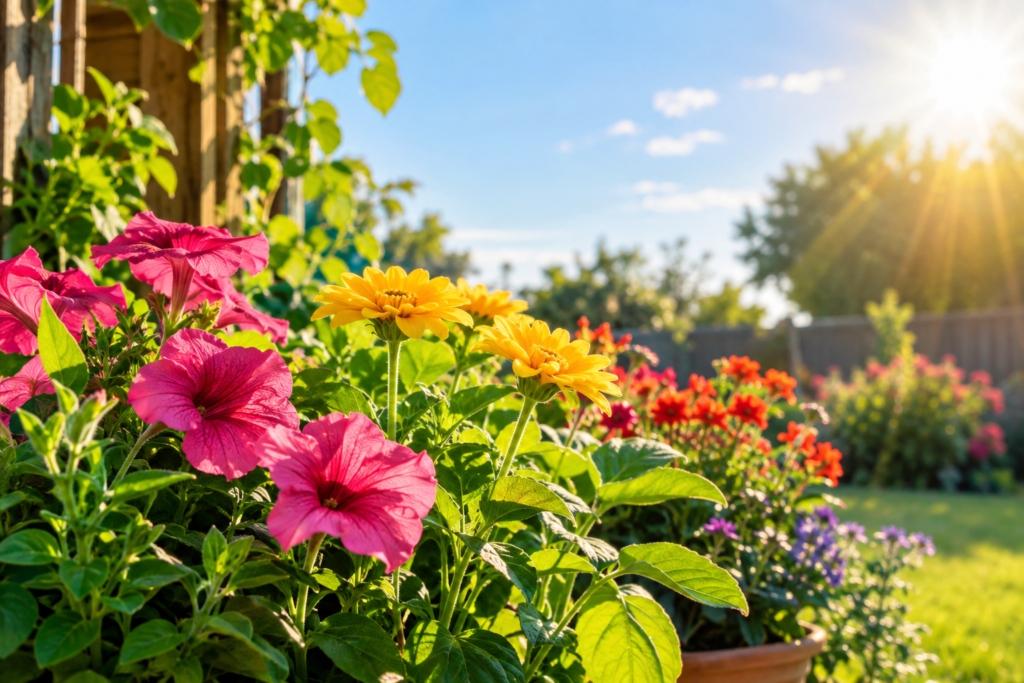
Morning Sun vs Afternoon Sun
Not all sunlight has the same effect on plants. Morning sunlight is usually gentler, while afternoon sunlight can be much stronger and hotter, particularly during summer.
For sensitive flowering plants, several hours of morning sunlight followed by afternoon shade can provide a useful balance. This can help the plant receive enough light for healthy growth while reducing the risk of heat stress.
On the other hand, many sun loving flowering plants can handle strong afternoon sunlight when they are properly established and receive enough moisture.
If you live in a very hot region, it is worth paying attention to the intensity of afternoon sunlight rather than simply counting the number of hours.
Signs Your Flowering Plant Needs More Sunlight
Plants often give us clues when they are not receiving enough light. One common sign is stretched or unusually tall growth. The stems may become thin as the plant tries to reach a brighter area.
Another sign is reduced flowering. A plant that normally produces many flowers may produce only a few when it does not receive enough sunlight.
Leaves can also become pale or smaller than expected. Growth may slow down, and the plant may appear generally weak.
If you notice these signs, do not immediately move the plant into intense sunlight. A sudden change from shade to strong direct sunlight can cause leaf damage. Instead, gradually introduce the plant to brighter conditions.
Signs Your Plant Is Getting Too Much Sunlight
Too much sunlight can also cause visible problems. Leaves may develop brown or crispy edges, pale patches, or scorched areas. Flowers can wilt quickly, especially when temperatures are high.
The soil may also dry out very quickly because strong sunlight increases evaporation.
If a flowering plant is suffering from excessive heat and direct sunlight, providing some afternoon shade may help. A location with morning sun and afternoon protection can be useful for plants that cannot tolerate intense heat.
Sunlight Requirements for Popular Flowering Plants
Different flowering plants have different preferences. Roses generally perform best with plenty of direct sunlight and good air circulation. Marigolds also enjoy sunny conditions and can produce abundant flowers when they receive enough light.
Petunias usually perform well in sunny locations, although they may need careful watering during hot weather. Zinnias are another popular choice for sunny gardens.
Begonias and impatiens can be better choices for areas with partial shade or filtered light.
When planning a garden, I like to group plants according to their sunlight requirements. This makes maintenance easier because plants with similar needs can share the same growing area.
How to Measure Sunlight in Your Garden
You do not always need special equipment to understand how much sunlight your garden receives. One simple method is to observe the area throughout the day.
Check the garden in the morning, around midday, and during the afternoon. Notice when direct sunlight reaches the area and when shadows appear.
You can also take notes for several days. This is particularly useful because the position of the sun changes throughout the year.
Trees and buildings can also create seasonal differences. A location that receives full sun during one season may receive considerably more shade during another.
Indoor Flowering Plants and Sunlight
Indoor flowering plants have different challenges because windows filter and limit the amount of natural light available.
A bright window can provide excellent light for some flowering plants, but placing a plant directly against a hot window may cause leaf damage. Observe how much direct sunlight enters through the window during different parts of the day.
Plants that prefer bright indirect light can often be placed near a bright window without being exposed to intense direct sunlight for long periods.
If your indoor flowering plant is not producing flowers, insufficient light may be one possible reason. Other factors such as watering, temperature, plant age, and nutrition can also affect flowering.
How to Protect Flowering Plants From Harsh Sunlight
During very hot weather, even plants that normally love full sun may benefit from some protection.
I prefer using natural shade where possible. A nearby tree or taller plant can provide temporary protection during the hottest part of the day.
Container plants are easier to move, so you can relocate them when temperatures become extreme. Shade cloth can also be useful in some garden situations.
Mulching around outdoor plants can help the soil retain moisture, although mulch should not be placed directly against the plant stem.
Can You Move a Flowering Plant to More Sun?
Yes, but it is better to make the change gradually. A plant that has been growing in shade can experience stress if suddenly placed under strong direct sunlight.
Start by giving it a little more light each day. Over time, the plant can become accustomed to brighter conditions.
This gradual approach is especially important during hot weather. Keep an eye on the leaves and flowers as you increase the amount of sunlight.
Choosing the Right Location for Flowering Plants
Before planting, think about the plant’s sunlight requirements as well as your garden’s conditions.
For full sun flowers, choose an open area that receives several hours of direct sunlight. For partial shade plants, consider locations that receive morning sunlight and afternoon shade.
I also recommend thinking about the mature size of nearby trees and shrubs. A garden may be sunny today but become much shadier as surrounding plants grow.
Good planning can save you from repeatedly moving plants later.
Final Thoughts
So, how much sunlight do flowering plants need? The answer depends on the plant, but sunlight is essential for healthy growth and flowering. Many popular flowering plants need around six or more hours of direct sunlight, while others perform better with partial sun or bright filtered light.
In my view, the best approach is to understand each plant individually and observe your garden carefully. Do not assume that every flowering plant needs the same amount of sunlight. Watch the leaves, stems, flowers, and soil, and make adjustments when necessary.
When the right flowering plant is placed in the right amount of sunlight, the results can be impressive. Healthy leaves, strong growth, and colorful flowers are often the reward for choosing the correct location.
With a little observation and patience, you can create a garden where flowering plants receive the light they need to grow beautifully throughout the season.