 snailhas25000teeth
Related Articles
Best Low Maintenance Flowers for Home Gardens
Creating a beautiful home garden does not always mean spending hours every day watering, pruning, feeding, and caring for plants. In my experience, choosing the right flowers from the beginning can make gardening much easier and more enjoyable. Some flowers are naturally hardy, tolerate changing weather, and continue producing attractive blooms with only basic care.
If you want a colorful garden without a demanding maintenance routine, there are many excellent choices. The best low maintenance flowers for home gardens can add beauty to flower beds, balconies, patios, containers, and small outdoor spaces while keeping your gardening work manageable.
In this article, I will share some of my favorite low maintenance flowers and explain why they are suitable for beginners, busy gardeners, and anyone who wants a beautiful garden without complicated plant care.
What Makes a Flower Low Maintenance?
Before choosing flowers, I think it is useful to understand what low maintenance actually means. A low maintenance flower does not mean a plant that requires absolutely no care. Every living plant needs suitable sunlight, water, soil, and occasional attention.
Low maintenance flowers are generally plants that can handle normal garden conditions without constant supervision. They may tolerate short periods of dryness, grow well in ordinary soil, resist common garden problems, or bloom for long periods without frequent pruning.
When choosing flowers for your home garden, I recommend considering your local climate, available sunlight, soil type, and how much time you can realistically spend caring for plants.
Marigolds
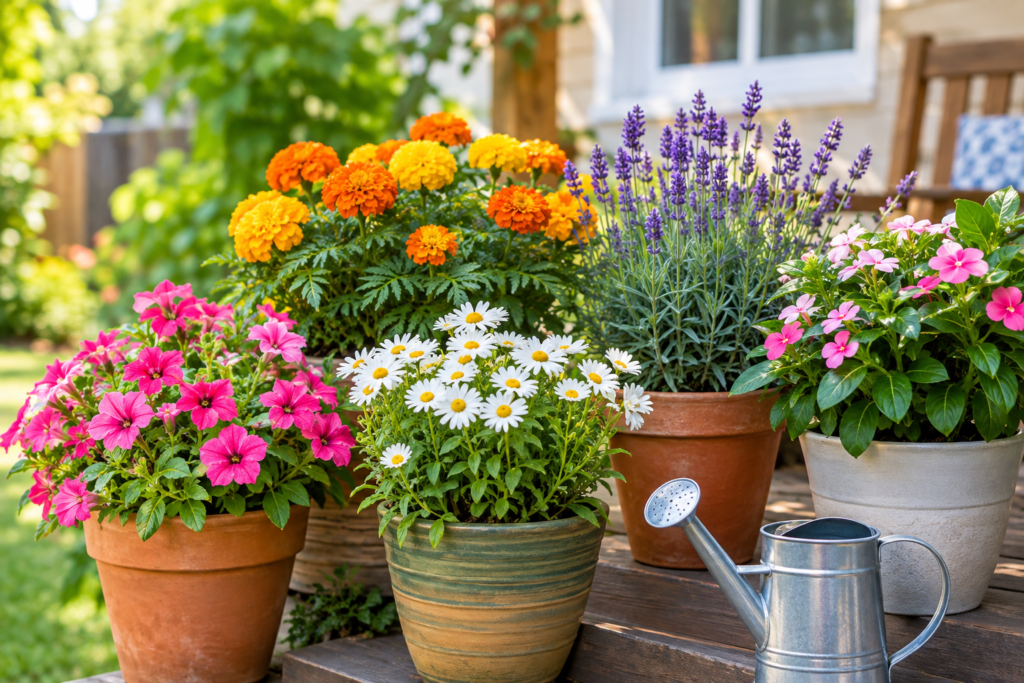
Marigolds are one of the first flowers I recommend to beginner gardeners. They are colorful, affordable, easy to grow, and generally quite forgiving.
Marigolds usually perform well in sunny locations and can produce flowers for a long period when basic growing conditions are suitable. They are available in shades of yellow, orange, and combinations of warm colors.
I particularly like marigolds because they can be grown in garden beds as well as containers. Regular watering is important when plants are establishing, but once they are growing well, they are relatively easy to manage.
Removing faded flowers from time to time can help keep the plant looking neat and may encourage additional flowering. Marigolds are a practical choice when you want plenty of color without complicated care.
Zinnias
Zinnias are another excellent option if you want plenty of color without a demanding maintenance routine. They come in many shades, including pink, red, orange, yellow, white, and purple.
Zinnias generally prefer plenty of sunlight and well drained soil. I find them especially useful when the goal is to create a bright and cheerful summer garden.
They can be grown from seeds, which makes them an economical choice. Once established, they mainly need appropriate watering and occasional removal of faded flowers if you want to encourage continued blooming.
Zinnias also make attractive cut flowers, so growing them at home can give you the opportunity to bring fresh flowers indoors.
Vinca
Vinca is a great choice for gardeners who live in warm conditions. It is known for its attractive flowers and glossy green leaves.
One reason I like vinca is its ability to perform well during warm weather when some other flowers begin to struggle. It can work particularly well in containers, borders, and sunny garden areas.
Vinca still needs proper watering, especially during very hot or dry periods, but it does not normally require an elaborate maintenance routine.
The flowers can add strong color to outdoor spaces, while the green foliage helps the plant remain attractive even when fewer flowers are present.
Petunias
Petunias are popular for a reason. They provide a large amount of color and work beautifully in containers, hanging baskets, and garden beds.
They prefer good sunlight and regular watering. I recommend checking the soil before watering rather than following a strict schedule because watering needs can change with temperature, rainfall, and container size.
Petunias may benefit from occasional removal of faded blooms and light trimming when they become overgrown. With these simple tasks, they can remain attractive for a long time.
For people with balconies or small patios, petunias can be particularly useful because they provide a lot of visual impact without requiring a large garden area.
Geraniums
Geraniums are another practical choice for containers, balconies, patios, and sunny garden spaces. Their flowers are available in several attractive colors, including red, pink, white, and purple shades.
I find geraniums especially useful when you want flowers close to the house. Their compact growth makes them suitable for pots and smaller spaces.
Good drainage is important because constantly wet soil can create problems. Allowing the growing medium to dry slightly between waterings can help maintain healthier plants, depending on the growing conditions.
With sufficient light and sensible watering, geraniums can provide attractive flowers while requiring relatively little daily attention.
Cosmos
Cosmos have a simple, natural appearance that I really enjoy. Their delicate flowers can make a garden look relaxed and colorful without requiring complicated landscaping.
They generally appreciate sunlight and reasonably well drained soil. Cosmos can also be useful for gardeners who want to grow flowers from seed.
Their tall and airy growth can add height to flower beds. If you have limited space, however, choose a suitable location because some varieties can become quite tall.
I like combining cosmos with shorter flowers because the different heights can make a garden look fuller and more interesting.
Sunflowers
Sunflowers are one of the easiest flowers to recognize and can bring a cheerful appearance to almost any suitable garden.
They generally enjoy plenty of sunlight and need enough water while developing. Once you understand their space requirements, they can be surprisingly straightforward to grow.
I recommend choosing a location where they will not block smaller plants from receiving sunlight. Taller varieties may also need support in windy locations.
Sunflowers can be a particularly enjoyable choice for families because children often enjoy watching them grow from small seedlings into tall flowering plants.
Lavender
Lavender is an excellent option if you want attractive flowers combined with fragrant foliage. It can work particularly well in sunny areas with well drained soil.
One thing I always keep in mind with lavender is drainage. It does not usually appreciate staying in soggy soil for extended periods.
Once established in a suitable location, lavender can be relatively easy to maintain. It also adds a pleasant fragrance and can give a garden a more structured appearance.
If your climate and soil conditions are suitable, lavender can be a wonderful addition to a low maintenance flower garden.
Daisies
Daisies are simple, attractive, and suitable for gardeners who prefer a classic flower garden appearance.
Many daisy types are relatively easy to grow when planted in suitable conditions. Their white petals and yellow centers provide a clean contrast against green foliage.
Daisies can be planted in groups for a stronger visual effect. They are also useful for filling spaces around taller flowers.
I like daisies because they have a natural appearance that works well in both traditional and informal home gardens.
Portulaca
Portulaca is worth considering if your garden receives plenty of sunlight and you want a flower that handles warm and relatively dry conditions well.
The flowers come in several bright colors and can create a colorful carpet in suitable locations. Portulaca is also a useful choice for containers and areas where the soil drains quickly.
I would avoid placing it in areas where water remains around the roots for long periods. Good drainage is one of the most important factors for keeping this plant healthy.
For gardeners who live in warm regions, portulaca can be an especially useful low maintenance flowering plant.
Coreopsis
Coreopsis is another flower worth adding to a low maintenance garden. Its bright blooms can bring a cheerful yellow or golden appearance to flower beds.
It generally prefers sunlight and well drained soil. Once established, many coreopsis varieties can be fairly easy to manage.
I like using plants such as coreopsis when designing a garden because they can provide seasonal color without requiring complicated daily care.
It can also work well alongside other flowers, especially when you want to create a garden with different colors and heights.
How to Make Your Flower Garden Easier to Maintain
Choosing low maintenance flowers is only one part of creating an easy garden. The way you plant and care for them also makes a major difference.
First, choose plants according to the amount of sunlight your garden receives. A flower that loves full sun may perform poorly in deep shade. Similarly, a shade loving plant may struggle when exposed to intense afternoon sunlight.
Second, improve the soil before planting. Healthy soil gives plants a stronger foundation and can reduce many growing problems later. Good drainage is particularly important for flowers that dislike constantly wet roots.
Mulching around plants can also be helpful. A suitable layer of organic mulch can help the soil retain moisture and can reduce the amount of time spent dealing with weeds.
I also recommend grouping flowers with similar water and sunlight requirements together. This makes watering much easier because you do not have to treat every plant differently.
Watering Low Maintenance Flowers
One of the biggest mistakes I see in home gardening is watering plants too frequently without checking the soil.
Instead of watering automatically every day, check the soil and consider the weather. Newly planted flowers generally need more consistent moisture while their roots become established. Mature plants may need less frequent watering depending on rainfall, temperature, soil, and container size.
Container plants often dry out faster than plants growing in the ground, especially during hot weather. Always check containers regularly during periods of high temperatures.
The goal is not simply to give plants as much water as possible. The goal is to provide the amount of moisture they actually need.
Feeding and Pruning
Low maintenance flowers usually do not need complicated feeding schedules. However, healthy soil and occasional appropriate fertilizer can support flowering when needed.
Avoid assuming that more fertilizer means more flowers. Excessive fertilizer can create problems and may encourage excessive foliage instead of the flowering you want.
Pruning requirements also vary by plant. Some flowers benefit from removing faded blooms, while others need very little pruning. A small amount of regular attention can keep plants looking tidy without turning gardening into a full time task.
Choosing Flowers for Your Local Climate
Climate should always be part of your decision. A flower that is easy to grow in one region may require much more attention in another.
If you live in a hot area, consider flowers that tolerate warm conditions and strong sunlight. If your garden experiences cooler winters, choose plants that can handle your seasonal temperatures or grow them as annuals.
Local nurseries can be a useful source of information because they often stock plants that perform well in the surrounding climate.
I believe it is better to choose a few flowers that naturally suit your environment than to constantly struggle with plants that are not comfortable in your growing conditions.
Final Thoughts
The best low maintenance flowers for home gardens are not necessarily the most exotic or expensive plants. In my opinion, the best choices are flowers that match your garden conditions and your available time.
Marigolds, zinnias, vinca, petunias, geraniums, cosmos, sunflowers, lavender, daisies, portulaca, and coreopsis can all bring color and character to the right garden when their basic needs are met.
My biggest gardening tip is to start simple. Choose a few reliable flowers, understand how much sunlight and water they need, and give them suitable soil. Once you become comfortable with those plants, you can gradually experiment with new varieties.
A low maintenance garden should make your life easier, not create another daily responsibility. With the right flower selection and a little planning, you can enjoy a colorful and welcoming home garden while keeping the amount of regular maintenance under control.
SEO Keywords: best low maintenance flowers for home gardens, low maintenance flowers, easy flowers to grow, easy garden flowers, beginner friendly flowers, low care flowering plants, flowers for home gardens, easy flowering plants, low maintenance garden ideas, flowers for beginners