 snailhas25000teeth
Related Articles
Cold weather can be challenging for garden plants, especially those that are sensitive to frost and sudden temperature changes. In my experience, protecting plants during winter is not only about covering them when the temperature drops. Good preparation, proper watering, mulching, and choosing the right protection method can make a big difference in how well plants survive the cold season.
Some plants can naturally tolerate low temperatures, while others need extra care. Young plants, tropical plants, vegetables, flowering plants, and plants growing in containers are often more vulnerable. The good thing is that protecting garden plants during cold weather does not always require expensive equipment. Simple materials and regular observation can often provide enough protection.
Understand How Cold Weather Affects Plants
Before protecting your garden, it helps to understand what cold weather actually does to plants. Frost can damage tender leaves, flowers, stems, and new growth. When temperatures fall below freezing, water inside plant cells can freeze and cause cell damage.
Cold winds can also dry out plants. This is especially noticeable in evergreen plants because they continue losing moisture through their leaves even when the soil is cold.
Another problem is sudden temperature change. A plant may experience a mild afternoon followed by a very cold night. These rapid changes can be stressful, particularly for plants that are not naturally suited to cold conditions.
For this reason, I believe the best approach is to prepare your garden before severe cold arrives rather than waiting until plants have already suffered damage.
Move Container Plants to a Safe Place
Container plants are usually more vulnerable to cold weather than plants growing directly in the ground. The soil inside a pot can become cold much faster because there is less insulation around the roots.
If you have sensitive plants in containers, consider moving them to a sheltered location. A garage, greenhouse, enclosed porch, or protected area near a building can provide useful protection.
However, avoid placing plants in a completely dark location for an extended period. Plants still need light and some air circulation.
If moving large containers is difficult, group several pots together in a protected area. Keeping containers close to one another can reduce exposure to cold wind.
Use Mulch to Protect Plant Roots
One of the easiest ways to protect garden plants during cold weather is to add mulch around the base of plants. Mulch helps insulate the soil and protects plant roots from rapid temperature changes.
You can use materials such as dry leaves, straw, compost, pine bark, or other suitable organic mulch. Apply a reasonable layer around the root area, but avoid piling it directly against the stem or trunk.
Roots are extremely important because damaged roots can make it difficult for a plant to recover when warmer weather returns. Even if the leaves are affected by frost, healthy roots can give the plant a much better chance of producing new growth.
Cover Plants Before Frost
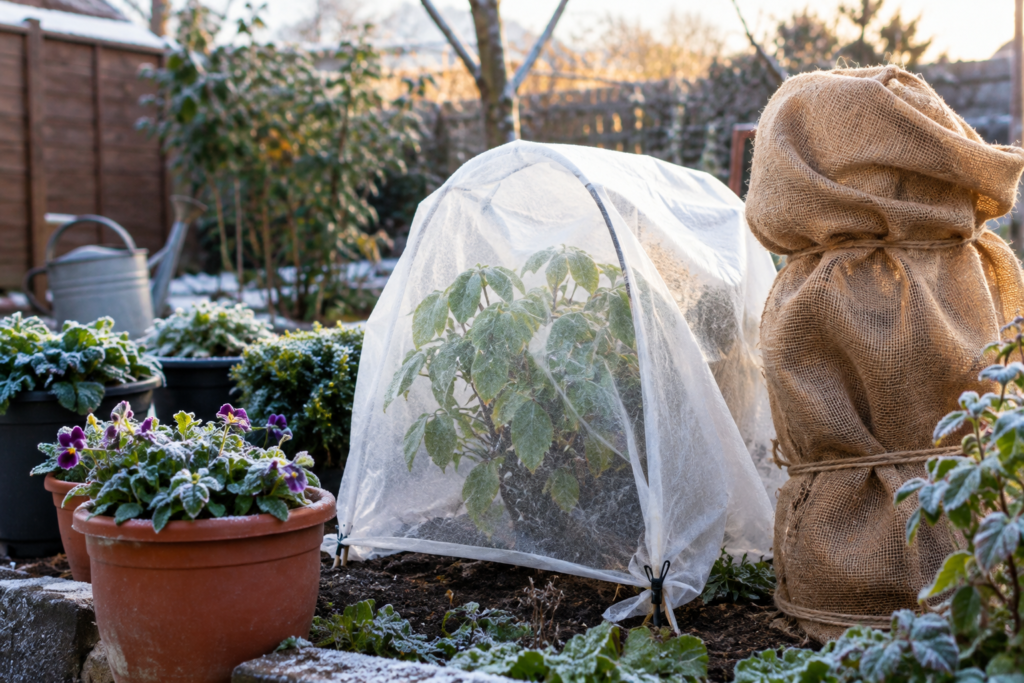
Plant covers are useful when a frost warning is expected. You can use frost cloth, garden fabric, or another breathable material designed for plant protection.
The cover should reach close to the ground so that warmer air around the soil is trapped underneath. If possible, support the cover with hoops or stakes rather than allowing it to rest heavily on delicate foliage.
Avoid using plastic directly against plant leaves. Plastic can become very cold and may increase the risk of damage where it touches the plant. It can also trap too much moisture when temperatures rise.
If plastic is being used as an outer barrier, keep it away from the foliage and remove or ventilate it when temperatures rise.
Protect Young Plants
Young plants often need more protection than mature plants. Their roots and stems are still developing, and they may not have enough strength to tolerate severe cold.
Before winter, inspect newly planted shrubs, flowers, vegetables, and small trees. Add mulch around their root zones and use protective covers when frost is expected.
I find it particularly important to pay attention to plants that were planted shortly before winter. They may need extra care because they have not had enough time to establish a strong root system.
Water Plants Before a Freeze
Proper watering can help plants handle cold weather, although timing is important. If the soil is dry before a freezing night, plants can experience additional stress.
Water the soil thoroughly before a significant freeze when conditions allow, preferably earlier in the day. Moist soil can hold more heat than very dry soil, providing some additional protection to plant roots.
However, avoid keeping the soil constantly wet. Waterlogged soil can create other problems, including root damage and fungal issues.
The goal is to maintain appropriate soil moisture, not to soak the garden unnecessarily.
Protect Plants From Cold Winds
Cold wind can be just as damaging as low temperatures. Wind increases moisture loss and can dry out leaves and stems.
You can protect plants by placing them near walls, fences, or other structures that provide shelter. For particularly sensitive plants, temporary wind barriers can also help.
When planting a new garden, I recommend considering wind exposure from the beginning. A sheltered planting location can reduce the amount of winter protection required later.
Wrap Sensitive Shrubs and Trees
Some shrubs and young trees benefit from additional protection during very cold weather. Burlap can be useful for protecting plants from cold winds without completely blocking air circulation.
Rather than wrapping a plant extremely tightly, create a protective barrier around it. Make sure the material does not remain wet against the plant for long periods.
For young tree trunks, suitable tree guards can help prevent damage from cold conditions and other winter problems. Always use products appropriately for the plant and local conditions.
Take Special Care of Tender Vegetables
Cold weather can quickly damage warm season vegetables such as tomatoes, peppers, beans, and other frost sensitive crops.
If these plants are still producing and a cold night is expected, cover them before sunset. Remove the covers after temperatures rise the following morning.
For longer periods of cold weather, it may be better to harvest mature vegetables and remove plants that are unlikely to survive.
Cool season vegetables such as spinach, kale, carrots, and some varieties of lettuce can tolerate considerably lower temperatures. Still, protection may be useful during unusually severe weather.
Avoid Heavy Pruning Before Winter
It can be tempting to cut everything back in the garden before winter. However, heavy pruning at the wrong time can sometimes encourage new growth that is more vulnerable to cold.
I prefer to remove clearly dead, damaged, or diseased material while avoiding unnecessary pruning of plants that are preparing for winter.
The correct pruning schedule depends on the plant species. Some plants benefit from winter pruning, while others are better pruned later. Understanding the specific needs of your plants is more useful than following one rule for the entire garden.
Protect Plants From Snow and Ice
Snow can sometimes provide natural insulation, but heavy snow and ice can place excessive weight on branches.
If heavy snow accumulates on shrubs or small trees, gently remove it when possible. Do not shake frozen branches aggressively because brittle branches can break easily.
Ice should generally be allowed to melt naturally rather than being forcibly removed from delicate branches.
Keep an Eye on Weather Changes
Successful winter plant care requires regular observation. Weather can change quickly, so checking the forecast can help you prepare before a cold night arrives.
If temperatures are expected to fall significantly, inspect your garden during the afternoon. Make sure covers are secure, container plants are protected, and mulch is still covering the root area.
After the cold period passes, check your plants carefully. Some damage may not become obvious immediately.
Do Not Panic After Frost Damage
Seeing brown, wilted, or blackened leaves after frost can be disappointing. However, I would not immediately remove a plant simply because its leaves look damaged.
The roots and lower stems may still be alive. Give the plant some time to recover as temperatures improve.
Avoid aggressive pruning immediately after a freeze unless there is a clear safety concern or damaged material needs to be removed. Wait until you can better determine which parts of the plant are actually dead.
In many cases, plants can produce fresh growth once warmer conditions return.
Prepare Your Garden Before Winter
The best winter garden protection often starts before temperatures become extremely cold. Clean the garden, remove diseased plant material, check containers, add mulch, and identify plants that may need extra protection.
It is also useful to know which plants in your garden are frost sensitive. Once you understand their individual needs, protecting them becomes much easier.
I have found that preparation is usually better than trying to rescue a plant after severe frost has already caused damage.
Final Thoughts
Protecting garden plants during cold weather does not have to be complicated. Simple steps such as adding mulch, covering sensitive plants, moving containers, protecting roots, and reducing exposure to cold winds can make a noticeable difference.
The most important thing is to understand that every plant has different needs. Some plants naturally tolerate freezing temperatures, while others need significant protection. Paying attention to your local weather and observing how your plants respond will help you develop a better winter care routine.
With a little preparation, your garden can get through cold weather in much better condition. When spring arrives, healthy roots and protected plants will have a stronger opportunity to produce fresh leaves, flowers, and new growth.