 snailhas25000teeth
Related Articles
Clean and healthy looking leaves can make a big difference in the overall appearance of a plant. In my experience, many people focus on watering, sunlight, fertilizer, and soil while forgetting one simple part of plant care: keeping the leaves clean. Dust, dirt, and other particles can build up on leaves over time, especially on indoor plants. Outdoor plants can also collect dust, pollen, soil, and other debris.
Learning how to clean plant leaves properly is not difficult, but it is important to use gentle methods. Leaves can be more delicate than they look, and rough cleaning, harsh chemicals, or excessive moisture can cause damage.
In this guide, I will explain how to clean plant leaves safely, what tools you can use, which methods work best, and what mistakes you should avoid.
Why Should You Clean Plant Leaves?
Plant leaves naturally collect dust from the air. Indoor plants may become dusty because of household activities, open windows, heating systems, fans, and everyday movement around the home. Outdoor plants can become dirty because of wind, rain splashes, soil, and pollution.
A layer of dust can cover the natural surface of the leaf and reduce the amount of light reaching it. Since plants use light for photosynthesis, keeping the leaves reasonably clean is a simple part of maintaining good plant care.
Clean leaves also make it easier to notice problems. When leaves are covered in dust, it can be harder to spot pests, discoloration, spots, or other signs that a plant may need attention.
I also find that regularly cleaning leaves makes indoor plants look fresher and more attractive. You do not need to make them perfectly shiny. The goal is simply to remove dirt without harming the natural surface of the leaves.
What Do You Need to Clean Plant Leaves?
The good news is that you do not need expensive products for basic leaf cleaning. A few simple items are usually enough.
A soft, clean cloth is one of the best choices. Microfiber cloths can work well because they are gentle and can collect dust without requiring strong pressure.
You can also use clean water in a spray bottle. However, spraying should be done carefully because some plants do not like having wet leaves for long periods.
For smaller plants, a soft makeup brush or a very soft paintbrush can help remove dust from delicate leaves and narrow spaces.
A bowl of clean, lukewarm water can also be useful. Avoid very hot or very cold water because extreme temperatures are unnecessary and may stress sensitive plants.
How to Clean Plant Leaves Safely
The safest method depends on the type of plant and the condition of its leaves. Before cleaning the entire plant, I recommend checking one leaf first. This is especially useful if you are trying a method for the first time.
1. Start With a Soft Cloth
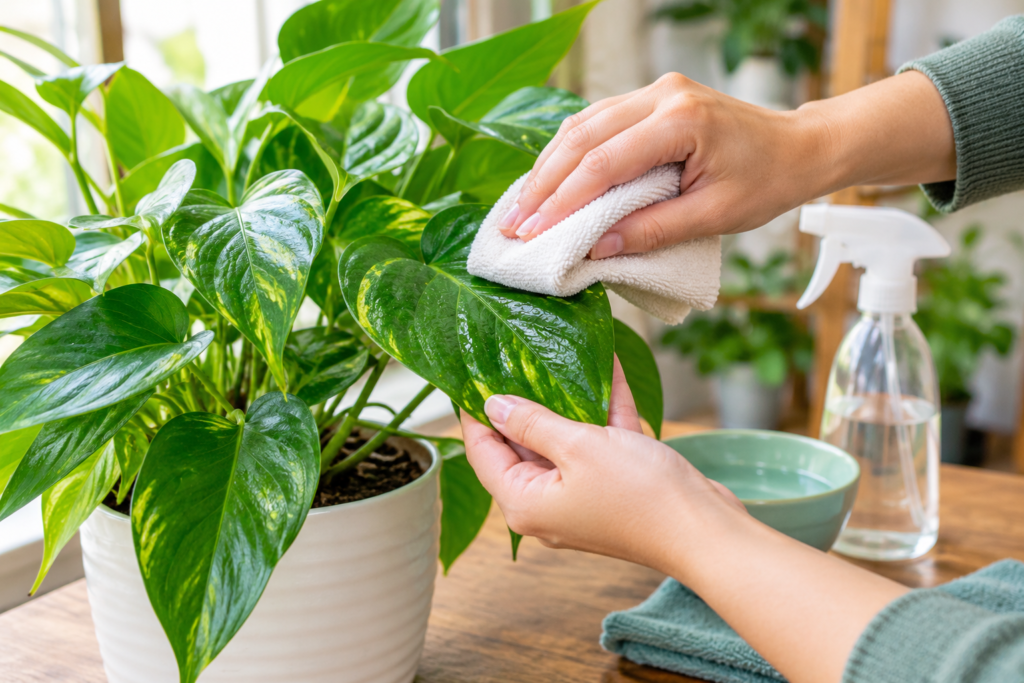
Take a clean, soft cloth and lightly dampen it with water. The cloth should be moist rather than soaking wet.
Support the leaf gently with one hand while using the other hand to wipe the surface. Move from the base of the leaf toward the tip using gentle strokes.
Do not press hard. You are removing dust, not scrubbing the leaf.
Supporting the leaf is important because it prevents unnecessary bending or pulling. This is particularly helpful with large leaves that can tear or crack when handled roughly.
2. Clean Both Sides When Necessary
Many people only clean the top of the leaf, but dust can also collect underneath. The underside may also be where pests hide.
If the plant has strong, healthy leaves, you can gently clean both sides. Hold the leaf carefully and wipe the underside without applying pressure.
However, I would avoid repeatedly touching very delicate leaves. Some plants have thin foliage that can be damaged easily.
3. Use a Soft Brush for Delicate Plants
A soft brush can be better than a cloth for plants with small, textured, hairy, or fragile leaves.
Use the brush gently and move it across the surface without pushing into the leaf. This method can remove loose dust without rubbing the leaf too much.
If the plant has very delicate foliage, start with the lightest possible pressure. You can always clean it again later if some dust remains.
4. Rinse Suitable Plants With Water
Some plants can be cleaned by gently rinsing their foliage with lukewarm water. This can be a convenient method for plants with many leaves.
If you choose this method, make sure the water pressure is gentle. Strong water pressure can break leaves, bend stems, or disturb the soil.
After rinsing, allow excess water to drain properly. Good air circulation is also helpful so the foliage can dry naturally.
I would not use this method automatically for every plant. Some plants have sensitive leaves or special moisture requirements, so a gentle cloth is often the safer option.
Should You Use Soap to Clean Plant Leaves?
For normal household dust, plain water is usually enough. There is generally no need to use soap simply to make leaves look cleaner.
If you believe a plant has a pest problem, cleaning the leaves can be part of the process, but using random household cleaning products is not a good idea. Dishwashing liquid, glass cleaner, disinfectants, and other household chemicals may damage plant tissue.
If a specific treatment is needed for pests, use a product intended for plants and follow its label instructions carefully.
My general approach is simple: if water can do the job, there is no reason to add unnecessary chemicals.
Avoid Leaf Shine Products
Leaf shine products are often marketed as a way to make plants look glossy and attractive. However, I prefer not to use them as part of normal plant care.
A naturally clean leaf does not need to look artificially shiny. Some products can leave a coating on the foliage, which may interfere with the natural surface of the leaf.
Instead of trying to make your plant look polished, focus on removing dust gently. Healthy foliage should look natural.
How Often Should You Clean Plant Leaves?
There is no single schedule that works for every plant. The amount of cleaning required depends on your home, the plant species, leaf texture, and surrounding environment.
For many indoor plants, checking the leaves every few weeks is a good habit. If you can see dust building up, it is probably time to clean them.
Plants kept near open windows, busy rooms, kitchens, or areas with more dust may need cleaning more frequently.
Outdoor plants usually do not need regular wiping because rain can naturally wash away some dust. Still, you may occasionally need to remove soil or debris from their leaves.
The important thing is not to turn leaf cleaning into a stressful routine. Simply inspect your plants regularly and clean them when they actually need it.
Common Mistakes to Avoid
One of the biggest mistakes is rubbing leaves too aggressively. Even if a leaf looks strong, repeated rough handling can cause scratches, tears, or other damage.
Another mistake is using dirty cloths. A cloth that contains dust or cleaning chemicals can spread dirt instead of removing it. Always use a clean cloth.
Avoid using extremely cold or hot water. Lukewarm water is a safer and more comfortable choice for most plants.
Do not leave plants sitting in water after cleaning. Excess moisture around the roots can create other problems, especially if the plant is already growing in poorly draining soil.
Another mistake is cleaning plants under intense direct sunlight when the leaves are wet. It is better to clean them in comfortable conditions and allow them to dry naturally.
Finally, do not assume that every plant should be treated the same way. Different plants have different leaf textures and moisture preferences.
Cleaning Plant Leaves Can Help You Find Pests
One benefit I really appreciate about cleaning leaves is that it gives you a chance to inspect your plant closely.
While wiping the leaves, look for tiny insects, webbing, sticky residue, unusual spots, or changes in color. Check both sides of the foliage when practical.
Finding a problem early can make plant care much easier. If you notice pests, separate the affected plant from other plants when appropriate and identify the pest before choosing a treatment.
Cleaning alone may not solve a serious infestation, but it can help you notice problems before they become more difficult to manage.
How to Clean Large Plant Leaves
Large leaf plants can take a little more time, but the basic method remains simple.
Place one hand underneath the leaf to support it. Use a damp microfiber cloth in your other hand and gently wipe from the base toward the tip.
Clean one section at a time rather than trying to wipe the entire leaf with one aggressive movement.
For plants with very large foliage, I prefer working slowly. Taking a few extra minutes is better than accidentally tearing a beautiful leaf.
How to Clean Small Plant Leaves
Small leaves can be more difficult to wipe individually. In this situation, a gentle shower or fine spray may be more practical if the plant tolerates it.
Another option is using a very soft brush to remove loose dust.
Do not try to make every tiny leaf perfectly clean. A gentle approach is more important than achieving a spotless appearance.
Final Thoughts
Knowing how to clean plant leaves without damaging them is a small but useful part of plant care. In my opinion, the best approach is to keep things simple. Use clean water, a soft cloth or brush, gentle pressure, and enough patience to avoid damaging the foliage.
You do not need special chemicals or expensive products to keep most plant leaves looking healthy. Regularly checking the foliage, removing dust, and looking for signs of pests can make plant care easier and help you notice problems early.
Remember that every plant is different. Some have thick, strong leaves, while others have delicate foliage that should be handled very carefully. When you are unsure, start with the gentlest method and test it on a small area first.
Clean leaves are not about making a plant look artificial or perfectly polished. They are simply part of maintaining a healthy and attractive plant. With a little regular attention, cleaning plant leaves can become an easy part of your normal plant care routine.