 snailhas25000teeth
Related Articles
Planning a garden at home does not have to be complicated. In my experience, a simple garden plan can make gardening much easier because it helps you understand where to plant, how much space you have, and what kind of plants will work best in your area. Whether you have a large backyard, a small outdoor space, or even a balcony, a little planning can save time and prevent common gardening mistakes.
A good garden plan is basically a simple map of your available space. It shows where you want to grow flowers, vegetables, herbs, trees, or other plants. It can also help you plan sunlight, watering, pathways, and the amount of space each plant needs.
In this guide, I will explain how I would make a simple garden plan at home using basic measurements and a few practical ideas.
Start by Choosing the Garden Space
The first step in making a garden plan is deciding where the garden will be located. Walk around your outdoor space and look at the areas that could be used for gardening.
You do not need a large area to start. A small corner of a backyard can be enough for a few vegetables and flowers. If you have limited outdoor space, containers and raised beds can also be included in your garden plan.
Before deciding on the final location, look at the condition of the ground. Check whether the area is flat or sloped, whether water collects there after rain, and whether there are walls, trees, buildings, or other objects that could affect the plants.
I recommend starting with the simplest area available. A manageable garden is much easier to maintain than a large garden that becomes difficult to care for.
Measure Your Available Space
Once you choose the location, measure the area. You can use a measuring tape to find the length and width of the garden space.
Write these measurements in a notebook. They do not have to be perfectly precise for a simple home garden plan.
For example, if your garden area is 20 feet long and 10 feet wide, you can make a simple drawing that represents those dimensions. If the area has an unusual shape, divide it into smaller sections and measure each section separately.
You can also take a few photographs of the space. Photos can be helpful later when you are deciding where to place different plants.
Observe How Much Sunlight You Get
Sunlight is one of the most important parts of garden planning. Different plants have different sunlight requirements, so I would never choose plants before checking the amount of sunlight available.
Spend a day observing your garden. Notice which areas receive direct sunlight in the morning, afternoon, and evening.
Some vegetables such as tomatoes, peppers, and many herbs generally perform best in sunny locations. Other plants can tolerate partial shade.
You should also remember that sunlight changes during the year. A location that receives plenty of sunlight in one season may receive less when the position of the sun changes.
When drawing your garden plan, mark the areas that receive full sun, partial shade, and more shade. This simple step can help you choose suitable plants later.
Decide What You Want to Grow
After studying your space, make a list of the plants you want to grow. This is where your personal gardening goals become important.
If you are mainly interested in vegetables, you might choose tomatoes, chilies, lettuce, carrots, spinach, or herbs. If your goal is to create a colorful garden, you might focus on flowers and ornamental plants.
I suggest starting with a small number of plants instead of trying everything at once. Beginners often become excited and choose too many varieties, but caring for a large number of plants can quickly become overwhelming.
Think about what you actually use at home. Growing herbs or vegetables that you regularly eat can make your garden more useful.
Draw a Simple Garden Layout
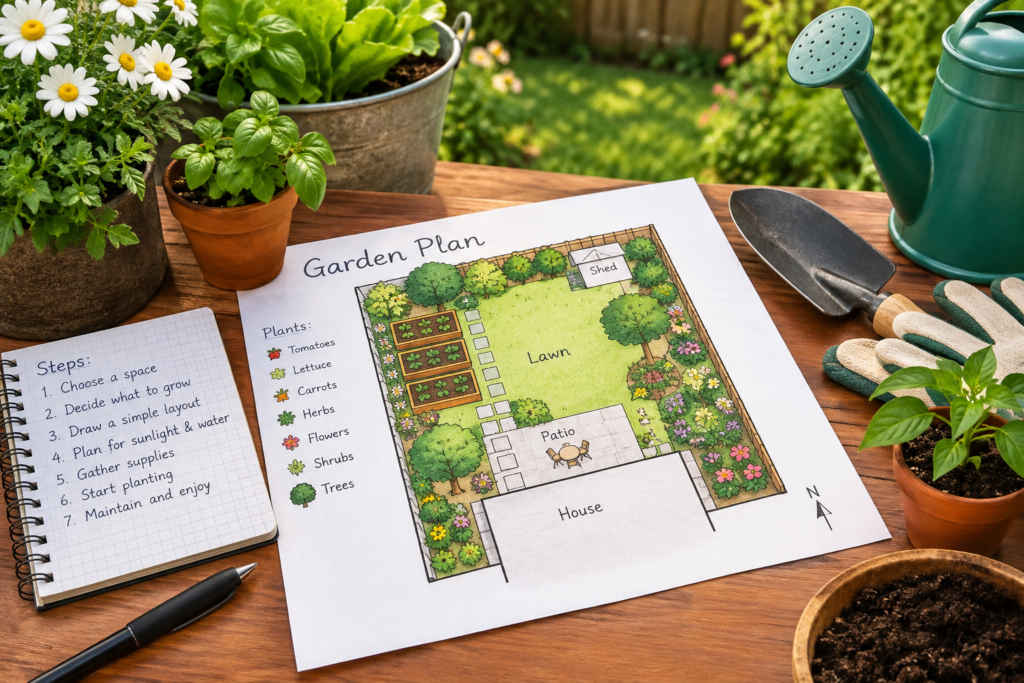
Now it is time to turn your ideas into a basic garden layout. You can use graph paper, a notebook, or a simple drawing app.
Start by drawing the boundaries of your garden. Then add important existing features such as the house, walls, trees, doors, paths, water sources, and storage areas.
Next, draw your planting areas.
You can create separate sections for vegetables, flowers, herbs, and other plants. Try to keep the layout simple and leave enough space to walk between planting areas.
For example, you could have vegetables in one section, flowers along the edges, and herbs near the kitchen if that location receives suitable sunlight.
A simple garden layout does not need to look professional. The purpose is to give you a clear idea of where everything will go.
Plan the Space Between Plants
One mistake I would avoid is planting everything too close together. Small plants may look like they have plenty of space when they are young, but they can become much larger as they grow.
Check the recommended spacing for each plant before putting it into your garden plan. Allow enough room for the mature size of the plant.
Proper spacing can improve air circulation and make watering, harvesting, pruning, and general maintenance easier.
It is also useful to leave walking space between planting beds. You do not want to step on the soil every time you need to reach a plant.
Think About Watering
Watering should also be included in your garden plan. Think about where your water source is located and how you will move water to each part of the garden.
If your garden is close to a water tap, you may only need a hose or watering can. If the garden is farther away, you should consider how much effort regular watering will require.
Try to place plants with similar watering needs together. This can make garden care easier because you will not have to treat every plant differently.
Good drainage is equally important. Plants need water, but excessive standing water can damage roots. If an area stays wet for a long time, consider improving drainage or choosing plants that tolerate moist conditions.
Consider Your Soil
Soil is another important part of a successful garden plan. Before planting, examine the soil in your selected area.
Healthy garden soil should provide plants with nutrients, air, and enough moisture. If the soil is poor, you may need to improve it with suitable organic matter or compost.
You can also have the soil tested if you want more detailed information about its condition.
In my view, it is better to improve the soil before planting rather than waiting for plants to struggle. Healthy soil gives plants a stronger foundation from the beginning.
Add Paths and Working Areas
A garden is not only about plants. You also need enough room to move around and work comfortably.
Add simple paths to your garden plan. These paths can be made from soil, stones, bricks, wood, or other suitable materials.
Make sure the main plants are easy to reach. You should be able to water them, remove weeds, check for pests, and harvest without damaging nearby plants.
If you use gardening tools regularly, consider placing a small storage area near the garden. Keeping basic tools nearby can make regular garden maintenance more convenient.
Choose Plants According to Your Local Conditions
When making a garden plan at home, do not choose plants only because they look attractive. Consider your local climate, seasonal temperatures, rainfall, sunlight, and soil conditions.
A plant that grows well in one region may not perform equally well somewhere else.
It is also useful to choose plants according to the season. Some vegetables and flowers perform better during cooler weather, while others prefer warmer conditions.
Local nurseries and experienced gardeners can often provide useful information about plants that perform well in your area.
Keep Your First Garden Simple
One of the best pieces of advice I can give a beginner is to keep the first garden simple.
You do not need to fill every available space. Start with a few plants and learn how they grow. Once you understand watering, soil care, sunlight, pruning, and pest control, you can gradually expand the garden.
A simple garden plan can also be changed later. You may discover that one plant grows better in another location or that a particular area receives more sunlight than you originally expected.
Do not be afraid to adjust your plan. Gardening is a learning process.
Make a Seasonal Garden Plan
It can also be helpful to think about your garden throughout the year. Some plants may only grow during particular seasons, while others can remain in the garden for much longer.
Create a basic seasonal list showing what you want to plant and approximately when you want to plant it.
This can help prevent empty spaces and make better use of your garden throughout the year.
You can keep this information in a notebook and update it as you gain experience.
Use Containers for Extra Space
If your garden area is small, containers can give you additional growing space. Pots can be used for herbs, flowers, vegetables, and many other plants.
Containers are particularly useful for balconies, patios, rooftops, and small outdoor areas.
When adding containers to your garden plan, consider their location, size, drainage, and sunlight requirements. Remember that containers can dry out faster than garden soil, so they may need more frequent attention.
Review Your Garden Plan Before Planting
Before buying seeds or plants, review your complete garden plan.
Ask yourself whether every plant has enough space. Check whether the plants are positioned according to their sunlight requirements. Think about watering access and walking paths.
Also consider how much time you realistically have for garden maintenance.
A garden should be enjoyable rather than becoming a daily source of stress. Your plan should match your available time, space, and gardening experience.
Final Thoughts
Making a simple garden plan at home is one of the easiest ways to organize your gardening project. You do not need professional design software or complicated measurements. A notebook, measuring tape, pencil, and a little observation can be enough to create a useful plan.
Start by choosing your garden space and measuring it. Observe sunlight and drainage, decide what you want to grow, and draw a basic layout. Then consider plant spacing, watering, soil, paths, and seasonal growing conditions.
From my point of view, the best garden plan is one that is practical and easy to maintain. Starting small gives you the opportunity to learn what works in your space without creating unnecessary work.
As you gain experience, you can expand your garden and improve your layout. With a little planning and regular care, even a simple home garden can become a productive and enjoyable part of your outdoor space.
Frequently Asked Questions
How do I make a simple garden plan?
Start by measuring your available space and marking sunlight, water sources, paths, and existing structures. Then decide what you want to grow and draw a basic layout showing where each plant will go.
What should I consider when planning a garden?
Important factors include sunlight, soil quality, drainage, plant spacing, watering, climate, available space, and the amount of time you can spend maintaining the garden.
Can I make a garden plan for a small space?
Yes. Small spaces can be planned using containers, vertical gardening, small raised beds, and compact plant varieties.
Should I start with a large garden?
For beginners, starting with a small garden is usually easier. You can learn basic plant care and gradually expand as your experience grows.
Why is garden planning important?
Garden planning helps you use your available space efficiently. It can also make watering, maintenance, harvesting, and plant care easier.