 snailhas25000teeth
Related Articles
Growing spinach at home is one of the easiest ways to enjoy fresh and healthy leafy vegetables. I personally like spinach because it does not require a large garden, expensive equipment, or complicated gardening techniques. With the right soil, enough sunlight, regular watering, and a little care, you can grow fresh spinach even if you are completely new to gardening.
Spinach grows relatively quickly and can be grown in garden beds, containers, pots, or even small spaces around your home. It is also a useful crop for people who want to start a simple home vegetable garden. In this guide, I will share how I grow spinach at home, what conditions it needs, and some simple tips that can help you get a healthy harvest.
Choose the Right Location for Growing Spinach
The first thing I consider when growing spinach is the location. Spinach grows best in a place where it receives plenty of sunlight, although it can also tolerate some partial shade.
Ideally, choose an area that receives around four to six hours of sunlight each day. Morning sunlight is especially useful because it provides light without exposing the plants to excessive afternoon heat.
If you live in a warm climate, afternoon shade can actually be helpful. Spinach prefers cooler conditions, and too much heat can cause the plant to grow quickly upward and produce seeds. This process is called bolting, and the leaves can become less tender.
Before planting spinach, observe your garden for a day or two and identify an area with good sunlight and protection from extreme heat.
Prepare Good Soil
Good soil is one of the most important factors in successful spinach gardening. I prefer soil that is loose, fertile, and rich in organic matter.
Spinach has relatively shallow roots, so it does not need extremely deep soil. However, the soil should drain well because standing water can damage the roots.
You can improve ordinary garden soil by mixing in compost or well decomposed organic matter. Compost provides nutrients and also improves the structure of the soil.
Avoid using fresh manure because it can be too strong for young plants. Well decomposed compost is a safer and more useful choice for a home vegetable garden.
The soil should also be slightly acidic to neutral. You do not necessarily need to test the soil if you are growing spinach casually, but a soil test can be useful if you want to improve your garden over time.
Select Good Spinach Seeds
Choosing good quality seeds can make a noticeable difference. I recommend purchasing spinach seeds from a reliable garden supplier and checking the packet for the recommended growing season.
There are different spinach varieties available, including types with smooth leaves and types with more textured leaves. Some varieties are better suited to cooler weather, while others have better tolerance to warmer conditions.
If you are a beginner, choose a variety that is suitable for your local climate. This can make growing spinach much easier.
You can also grow spinach from seeds saved from a previous crop, but for beginners, fresh commercially packed seeds are generally more reliable.
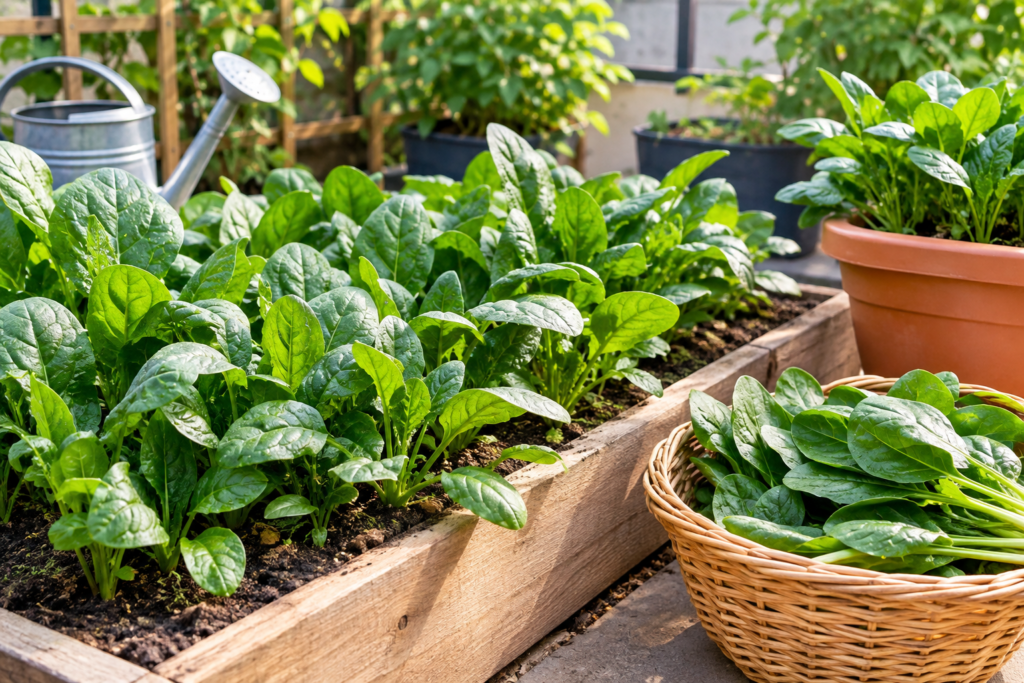
How to Plant Spinach Seeds
Once the soil is ready, planting spinach is quite simple. Make shallow rows in the soil and place the seeds about half an inch deep.
Try not to plant the seeds too deeply because spinach seeds need suitable conditions to germinate properly. Cover them lightly with soil and water gently.
If you are planting several rows, leave enough space between them so the plants have room to grow and you can easily water and harvest them.
For container gardening, you can sprinkle seeds across the surface of the soil and cover them lightly. Once the seedlings appear, thin them so the stronger plants have enough space.
One thing I have learned from growing leafy vegetables is that planting small amounts regularly can provide a more consistent harvest than planting everything at once.
Watering Spinach Plants
Spinach needs consistent moisture, especially during germination and early growth. The soil should remain slightly moist but should not stay waterlogged.
I usually check the top layer of soil with my finger before watering. If it feels dry, it is time to water.
During hot or dry weather, spinach may need water more frequently. During cooler weather, the soil may stay moist for longer.
Try to water around the base of the plants instead of constantly wetting the leaves. Watering early in the morning is also a good habit because excess moisture can dry during the day.
The most important thing is consistency. Irregular watering can stress spinach plants and affect their growth.
Give Spinach Enough Nutrients
Spinach grows quickly, so it needs access to nutrients. If you prepare the soil with good quality compost before planting, the plants may have enough nutrition for a while.
As the plants grow, you can add a small amount of compost around them. This is one of my preferred methods because it is simple and helps improve the soil naturally.
Avoid applying excessive fertilizer. Too much fertilizer is not necessarily better and can cause unwanted growth or nutrient problems.
Healthy soil is usually more important than adding large amounts of fertilizer.
Thin the Seedlings
When spinach seedlings begin to appear, they may initially grow very close together. If all the seedlings are left in place, they can compete for sunlight, water, nutrients, and space.
This is why thinning is important.
Once the seedlings are large enough to handle, remove some of the weaker or overcrowded plants. Leave enough space between the remaining seedlings for them to develop properly.
Do not throw away every plant you remove. Very young spinach seedlings can sometimes be used in salads or other dishes if they are clean and healthy.
Thinning also improves air circulation around the plants, which can help reduce some disease problems.
Protect Spinach From Weeds
Weeds can compete with spinach for water and nutrients. Because spinach seedlings are small, weeds can sometimes become a problem before you notice them.
I recommend checking the garden regularly and removing weeds while they are still small. Pull them carefully by hand so you do not disturb the spinach roots.
Adding a thin layer of organic mulch around established plants can also help reduce weed growth and keep the soil moist.
Mulching is especially useful during periods when the weather is dry.
Deal With Common Spinach Problems
Spinach is generally easy to grow, but it can still experience problems. Common issues include insect pests, fungal diseases, poor growth, and bolting.
Aphids and some caterpillars may feed on spinach leaves. I recommend checking the underside of leaves regularly because pests can sometimes hide there.
If you notice a small number of pests, removing them by hand may be enough. For larger problems, use a suitable gardening treatment according to the product instructions and make sure it is appropriate for edible vegetables.
Good spacing, proper watering, and clean garden practices can also help reduce disease problems.
The biggest challenge in warm weather is often bolting. When spinach experiences high temperatures or long periods of stress, it may produce a flower stalk and begin making seeds. Growing spinach during the cooler part of the season can help prevent this.
Harvest Spinach Correctly
One of the best things about growing spinach at home is that you do not always have to wait for the entire plant to mature before harvesting.
I prefer picking the larger outer leaves while allowing the smaller inner leaves to continue growing. This method can provide repeated harvests from the same plant.
Use clean scissors or your fingers to remove the leaves carefully. Avoid damaging the central growing point if you want the plant to continue producing.
You can also harvest the whole plant when it reaches the size you want. Freshly harvested spinach usually tastes better and feels more rewarding because you know exactly where it came from.
Harvesting in the morning can be a good option because the leaves are often fresh and hydrated.
Growing Spinach in Containers
If you do not have a traditional garden, do not worry. Spinach grows very well in containers.
Choose a container with drainage holes and fill it with good quality potting soil mixed with compost. The container should be large enough to give the roots adequate space.
Place it somewhere with suitable sunlight and water when the soil begins to dry.
Container grown spinach can be especially convenient for balconies, patios, rooftops, and small outdoor spaces.
I recommend checking container plants more frequently during hot weather because pots can dry out faster than garden soil.
Best Time to Grow Spinach
Spinach generally prefers cool growing conditions. The exact planting time depends on your local climate.
In cooler regions, spinach can be grown during spring and fall. In warmer areas, it is often better to grow it during the cooler months.
If your summers are very hot, avoid planting spinach during the hottest part of the year. High temperatures can cause bolting and reduce the quality of the leaves.
For gardeners in warm climates, choosing the right season can make a bigger difference than almost anything else.
Simple Tips for Better Spinach Growth
From my experience, a few simple habits can make spinach gardening much easier.
First, start with healthy soil rather than trying to fix poor soil later. Second, keep the soil consistently moist without creating standing water. Third, provide enough sunlight while protecting plants from excessive heat. Fourth, remove weeds regularly. Finally, harvest leaves frequently instead of allowing the plants to become overcrowded.
It is also a good idea to make small successive plantings. Instead of planting a huge amount of spinach at one time, plant a new batch every couple of weeks when the weather is suitable. This can give you a more continuous supply of fresh leaves.
Final Thoughts
Growing spinach in your home garden is a simple and rewarding project. You do not need a large piece of land or years of gardening experience to get started. With healthy soil, good seeds, proper watering, suitable sunlight, and the right growing season, you can produce fresh spinach at home.
What I like most about growing spinach is how quickly you can see progress. The seeds germinate, small leaves appear, and before long you can begin harvesting your own crop.
If you are planning to start a home vegetable garden, spinach is definitely one of the crops I would recommend trying first. Start with a small area or container, learn how the plants respond to your conditions, and gradually increase your planting. With a little patience and regular care, growing fresh spinach at home can become one of the easiest parts of your gardening routine.