 snailhas25000teeth
Related Articles
Choosing the right pot size for your plants is one of the most important parts of container gardening. In my experience, many plant problems that look like watering, soil, or sunlight issues can actually begin with the wrong pot. A container that is too small can restrict the roots, while a pot that is too large can hold too much moisture around the roots.
If you are growing houseplants, herbs, flowers, vegetables, or small fruit plants in containers, understanding how to choose the right pot size can make your plants healthier and easier to maintain. The good thing is that you do not need to be an expert gardener to get it right. You simply need to understand the plant, its roots, its current size, and how quickly it grows.
In this guide, I will explain how to choose the right pot size for your plants, what measurements to look for, when to repot, and which common mistakes you should avoid.
Why Pot Size Matters for Plant Growth
The pot is more than just a container for your plant. It provides space for the roots to grow, holds the growing medium, and affects how quickly water drains and dries.
I have found that healthy roots are the foundation of a healthy plant. When roots have enough room, they can absorb water and nutrients more effectively. When they become crowded, the plant may stop growing properly.
A pot that is too small can cause the soil to dry out very quickly. You may find yourself watering the plant more frequently, especially during hot weather. The roots may also become tightly packed inside the container.
On the other hand, choosing a pot that is much larger than necessary is not always better. A large container can hold more wet soil than the plant needs. If the soil remains wet for too long, the roots may have difficulty getting enough oxygen, which can contribute to root problems.
For this reason, I believe the best approach is to choose a pot that gives the roots enough room without providing an excessive amount of unused soil.
How to Choose the Right Pot Size
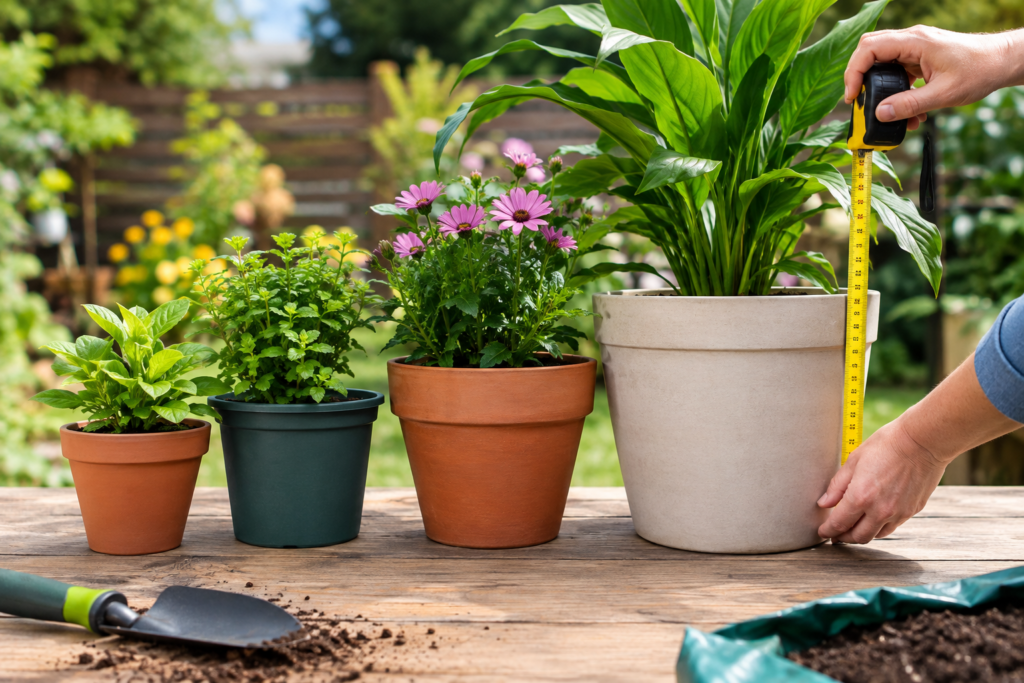
When choosing a new pot, I normally consider the size of the current root system and the overall size of the plant. For most plants, moving into a container that is about 2 to 5 centimeters wider than the current pot is a practical starting point.
For example, if your plant is currently growing in a 15 centimeter pot, you can often move it into a pot around 18 to 20 centimeters wide.
The exact size depends on the plant. Fast growing plants may need more space sooner, while slow growing plants can remain in the same container for a longer period.
You should also consider the depth of the container. Some plants have shallow roots and do not need a very deep pot. Others develop deeper root systems and need more vertical space.
The width and depth should therefore match the natural root growth of the plant.
Understanding Pot Diameter
Pot diameter is one of the easiest measurements to use when buying containers. Most garden centers describe pots by their diameter, usually measured across the top.
A small plant with a small root system generally does not need a huge container. Starting with a pot that is only slightly larger than the root ball can help you control moisture and encourage healthy root development.
As the plant grows, you can gradually increase the container size.
I prefer this gradual approach because it makes watering easier and reduces the chance of keeping unnecessary amounts of soil wet.
How Deep Should a Plant Pot Be?
Pot depth is just as important as pot width. Some plants need more vertical root space than others.
Plants such as lettuce, many herbs, and some shallow rooted flowers can grow well in relatively shallow containers. Plants such as tomatoes and larger ornamental plants usually benefit from deeper containers because they can develop larger root systems.
Before choosing a pot, I recommend checking how the particular plant naturally grows. If you are growing vegetables in containers, also consider the mature size of the plant.
A young tomato plant may look small when you buy it, but it can become much larger during the growing season. Choosing a container based only on the plant’s current size can lead to problems later.
Choosing Pot Size for Houseplants
Houseplants are often easier to manage when their containers are increased gradually.
For example, a small pothos, spider plant, peace lily, or similar houseplant does not usually need to jump from a small nursery pot into a very large decorative container.
Instead, choose a pot that is slightly larger than the existing root ball.
One thing I always pay attention to with indoor plants is drainage. A beautiful container is not useful if excess water cannot escape.
If you are using a decorative cover pot without drainage holes, it is often better to keep the plant in a suitable nursery pot inside it. This allows you to remove the plant and drain excess water after watering.
Choosing Pot Size for Herbs
Herbs are excellent plants for container gardening, especially if you have limited outdoor space.
Many herbs can grow successfully in medium sized containers. Basil, parsley, coriander, mint, and similar herbs can be grown in pots, but their individual needs are different.
Mint, for example, can spread aggressively through its roots, so keeping it in its own container is often a practical idea.
For herbs, I focus on providing enough space for healthy roots while avoiding a container that is unnecessarily large.
Good drainage is particularly important because constantly wet soil can create problems for many herbs.
Choosing Pot Size for Vegetables
Vegetables require more planning because the mature size of the plant can be very different from the size of a young seedling.
Tomatoes are a good example. A small tomato seedling may fit comfortably into a small pot, but as the plant grows, its root system becomes much larger.
Peppers, eggplants, cucumbers, and other container vegetables also need enough room for their roots.
When I choose a container for vegetables, I think about the plant’s final size rather than only its current appearance. This helps avoid unnecessary repotting later.
You should also consider the number of plants you want to grow. Growing several large plants in one small container can create competition for water, nutrients, and root space.
Choosing Pot Size for Succulents
Succulents have different watering needs from many common houseplants. They generally prefer soil that drains quickly and does not stay wet for long periods.
For succulents, I avoid choosing a container that is dramatically larger than the root system.
A pot that is too large can contain a lot of unused soil, which may stay moist longer than necessary after watering.
The container should provide enough room for growth while still allowing the soil to dry appropriately between waterings.
Signs That Your Pot Is Too Small
Plants often give you clues when their current pot is becoming too small.
One common sign is roots growing through the drainage holes. You may also notice that water runs through the container unusually quickly because the root system has taken up much of the available space.
Another sign is that the plant seems to dry out much faster than before.
Slow growth can also indicate that the roots are becoming restricted, although slow growth can have many other causes.
If you carefully remove the plant from its container and see roots circling densely around the outside of the root ball, it may be time to move the plant into a larger pot.
Signs That Your Pot Is Too Large
A pot that is too large can create a different set of problems.
The most obvious issue is soil that remains wet for a long time. If the plant has a small root system but is surrounded by a large amount of moist soil, the growing medium may take longer to dry.
You may also notice yellowing leaves, poor growth, or a general decline in plant health. These symptoms can have many causes, so they should not automatically be blamed on pot size.
Still, if your plant is sitting in a very large container and the soil remains wet for extended periods, the container size and drainage are worth checking.
Drainage Is Just as Important as Pot Size
Choosing the right pot size is only one part of successful container gardening. Drainage is equally important.
A good container should have suitable drainage holes that allow excess water to leave the pot.
Without drainage, water can collect at the bottom of the container. Even if the pot is the perfect size, poor drainage can create an unhealthy environment for roots.
I always recommend checking drainage holes before buying or planting in a container. If a decorative pot does not have drainage, consider using it as an outer container instead of planting directly into it.
Does Pot Material Affect the Right Size?
Yes, the material of the pot can affect watering and plant care.
Terracotta pots are porous and can allow moisture to evaporate through the sides. As a result, plants in terracotta may need watering more frequently than plants in plastic containers.
Plastic pots generally retain moisture longer and are lightweight. Ceramic containers can be attractive and sturdy but may also be heavier.
Because different materials dry at different rates, I consider both the pot material and the plant’s watering requirements when selecting a container.
When Should You Repot a Plant?
There is no single schedule that works for every plant. Some plants may need repotting every year, while others can remain in the same pot for several years.
Instead of repotting based only on a calendar, I prefer to look at the plant itself.
If roots are tightly crowded, water passes through unusually quickly, or the plant has clearly outgrown its container, it may be time to repot.
Spring is often a convenient time for repotting many plants because active growth is beginning, but the best timing depends on the plant and your local growing conditions.
Common Pot Size Mistakes to Avoid
One of the biggest mistakes is assuming that a bigger pot is always better. It is tempting to give a plant plenty of space, but too much unused soil can make moisture management difficult.
Another mistake is choosing a container based only on appearance. A beautiful pot may not be suitable if it lacks drainage or has inappropriate dimensions.
I also recommend avoiding frequent repotting simply because a plant looks large above the soil. The root system may still have plenty of space.
Finally, do not forget about the mature size of the plant. A container that works for a young plant may not be suitable once it reaches full size.
My Simple Rule for Choosing Pot Size
If you are unsure which pot size to choose, keep the process simple.
First, check the current pot and root system. Then choose a new container that is moderately larger rather than dramatically larger.
Make sure the container has proper drainage and enough depth for the plant’s roots. Consider the mature size of the plant and how quickly it grows.
After repotting, monitor the moisture level of the soil rather than following a strict watering schedule.
This simple approach has worked well for me because it allows the plant’s needs to guide the decision.
Final Thoughts
Learning how to choose the right pot size for your plants does not have to be complicated. The key is to understand that every plant needs enough room for its roots, but more space is not automatically better.
For most plants, gradually increasing pot size as the root system grows is a practical approach. Pay attention to pot width, depth, drainage, pot material, and the mature size of the plant.
In my view, the best pot is not necessarily the biggest or most attractive one. It is the container that gives your plant enough root space while allowing you to manage water and soil properly.
Once you start paying attention to these details, container gardening becomes much easier. Your plants will have a better environment for root growth, and you will have fewer problems with watering, overcrowding, and unnecessary repotting.
Whether you are growing houseplants, herbs, flowers, succulents, or vegetables, choosing the right pot size is a small decision that can make a noticeable difference in overall plant health.