 snailhas25000teeth
Related Articles
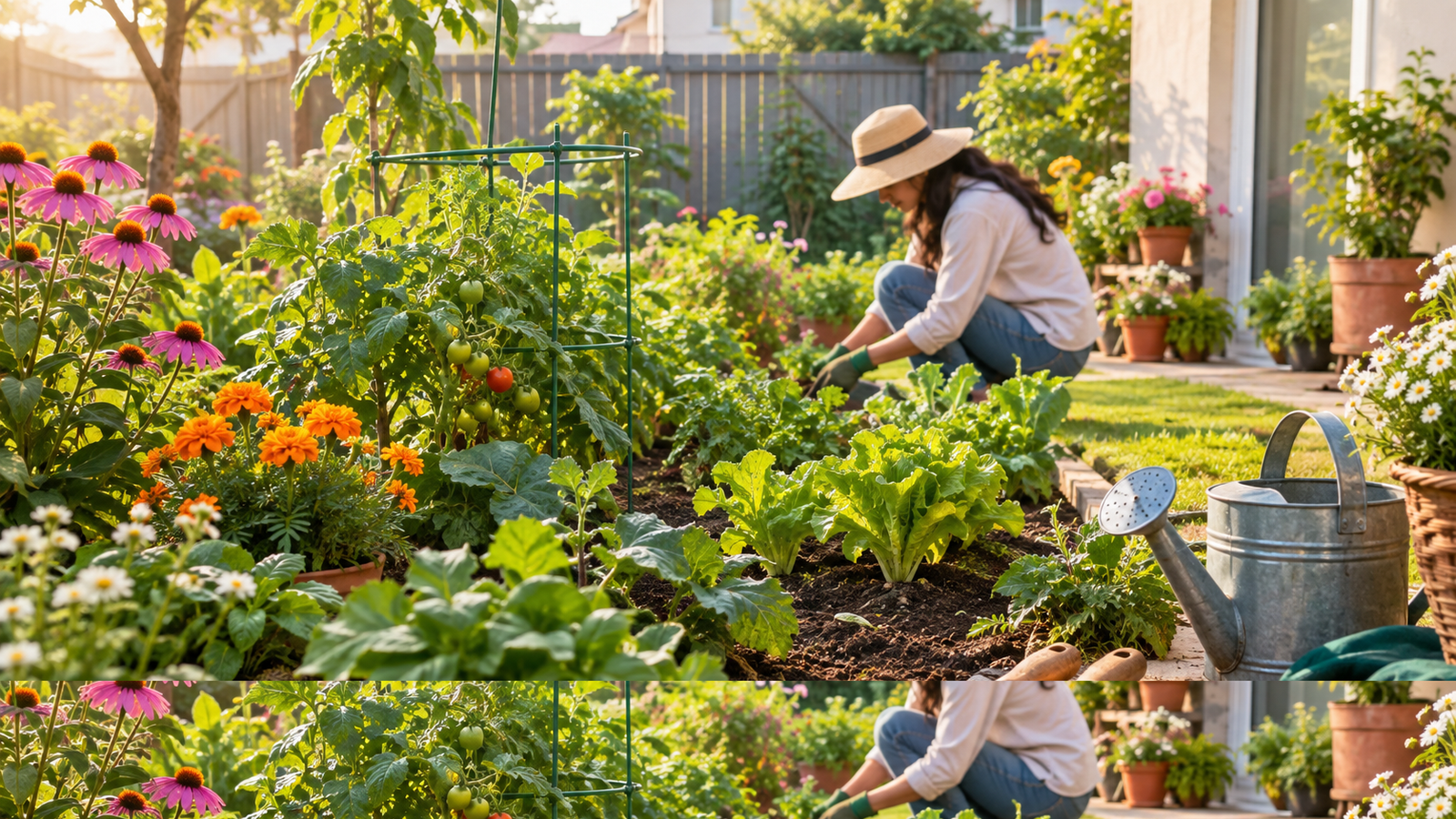
Sunlight is one of the most important things plants need for healthy growth. When I started learning more about gardening, I realized that watering and soil are only part of the picture. A plant can have good soil and regular watering, but if it does not receive the right amount of sunlight, it may still grow slowly, produce fewer flowers, or develop weak leaves.
Understanding how much sunlight garden plants need can make gardening much easier. Different plants have different sunlight requirements. Some plants grow best in full sun, while others prefer partial shade or even full shade. Choosing the right location for each plant can make a noticeable difference in the overall health of a garden.
In this guide, I will explain the different sunlight requirements for garden plants, how to identify the amount of sunlight in your garden, and how to choose plants according to the available light.
Why Sunlight Is Important for Plants
Plants need sunlight for photosynthesis. Photosynthesis is the natural process through which plants use sunlight, water, and carbon dioxide to produce energy. This energy helps plants grow leaves, stems, roots, flowers, and fruits.
From my experience with gardening, sunlight also has a major effect on the appearance of plants. A plant growing in suitable sunlight usually has stronger stems, healthier leaves, and better overall growth. When a plant receives too little light, it may become weak and stretched as it tries to reach a brighter area.
Too much direct sunlight can also cause problems for plants that prefer shade. Their leaves may become dry, pale, or scorched. This is why it is important to understand the sunlight needs of individual plants instead of assuming that more sunlight is always better.
What Does Full Sun Mean?
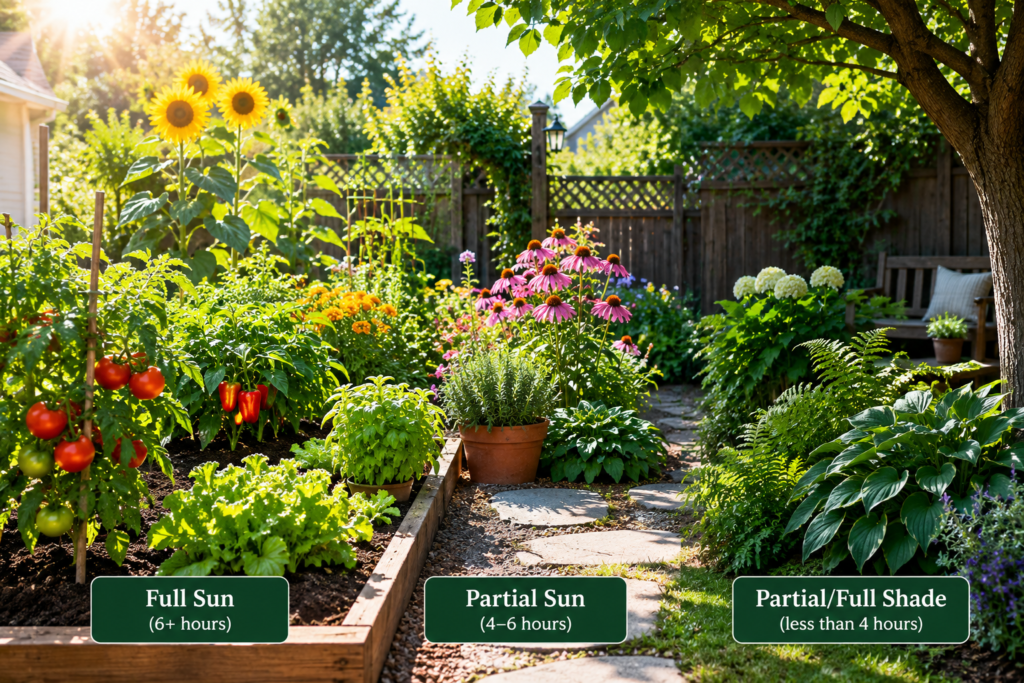
Full sun generally means that a plant receives at least six hours of direct sunlight per day. Some plants can perform even better with eight or more hours of sunlight, especially many vegetables and flowering plants.
Vegetables such as tomatoes, peppers, cucumbers, eggplants, and many herbs usually grow well in sunny locations. Flowering plants such as marigolds, zinnias, and sunflowers also benefit from plenty of direct sunlight.
If you have a garden area that receives strong sunlight for most of the day, it can be an excellent place for full sun plants. However, in very hot climates, intense afternoon sunlight can sometimes be stressful even for plants that normally prefer full sun. Providing adequate water and using suitable soil can help plants handle heat more effectively.
What Is Partial Sun?
Partial sun usually means around four to six hours of sunlight each day. Plants that prefer partial sun can tolerate some direct sunlight but may not need the long exposure required by full sun plants.
Partial sun can be especially useful in gardens where buildings, walls, trees, or other structures create periods of shade during the day.
Some flowering plants, herbs, and vegetables can grow successfully with partial sunlight. The exact requirement depends on the plant variety, climate, and growing conditions.
When planning a garden, I think partial sun areas should not be considered useless. They can provide excellent growing spaces for plants that do not enjoy intense sunlight throughout the entire day.
What Is Partial Shade?
Partial shade is similar to partial sun, but the emphasis is on protection from direct sunlight. A partially shaded area may receive around two to six hours of sunlight, often with shade during the hottest part of the day.
Plants that prefer partial shade can benefit from morning sunlight followed by afternoon protection. This can be particularly helpful in warm climates where afternoon temperatures become very high.
Partial shade is often found under trees, beside buildings, near walls, or in areas where sunlight is blocked for part of the day.
What Does Full Shade Mean?
Full shade does not mean that a plant receives absolutely no sunlight. Instead, it usually refers to an area that receives less than about two hours of direct sunlight each day, although it may still receive plenty of indirect or filtered light.
Some plants are naturally adapted to these conditions. Shade loving plants can often grow well in areas where full sun plants would struggle.
If your garden has a darker corner, do not automatically leave it empty. There are many plants that can be suitable for lower light conditions. The important thing is to choose plants that naturally tolerate shade.
How to Measure Sunlight in Your Garden
Before choosing plants, I recommend observing your garden for an entire day. This is one of the simplest ways to understand how much sunlight different areas receive.
Start in the morning and check which parts of your garden receive direct sunlight. Then check the same areas around midday and again in the afternoon.
You can make a simple note of how many hours each location receives direct sunlight. For example, one area may receive eight hours, another five hours, and another only two hours.
This simple observation can help you divide your garden into full sun, partial sun, partial shade, and shade areas.
Remember that sunlight can change during different seasons. A location that receives plenty of sunlight in winter may receive more shade in summer because of trees or nearby structures.
Morning Sun and Afternoon Sun
Not all sunlight has the same effect on plants. Morning sunlight is generally gentler, while afternoon sunlight can be stronger and hotter.
This difference matters especially in warm climates. Some plants may appreciate several hours of morning sunlight but struggle when exposed to intense afternoon heat.
When choosing a location, I prefer to consider not only the number of sunlight hours but also the time of day when the sunlight reaches the plant.
For sensitive plants, a location with morning sun and afternoon shade can sometimes be better than a location with strong sunlight throughout the entire day.
Signs That a Plant Is Not Getting Enough Sunlight
Plants often show visible signs when they are not receiving enough sunlight.
One common sign is weak or stretched growth. The plant may grow taller than normal as it tries to reach a light source. Its stems can become thin, and the spaces between leaves may become larger.
Leaves may also become smaller or lighter in color. Flowering plants may produce fewer flowers because they do not have enough energy for healthy blooming.
If you notice these signs, check the plant’s sunlight requirements. Moving the plant to a brighter location may help, provided that the change is made carefully.
Signs of Too Much Sunlight
Too much sunlight can also create problems. Plants that prefer shade may develop brown or crispy leaf edges. Leaves can become pale, dry, or scorched.
Wilting during hot weather can also be a sign of heat stress, although wilting may have several causes, including insufficient water.
If a shade loving plant is receiving intense afternoon sunlight, consider moving it to a more protected location. For plants growing in containers, this can be relatively easy because the containers can be moved according to seasonal conditions.
Sunlight Requirements for Common Garden Plants
Different garden plants have different needs. Tomatoes generally prefer plenty of direct sunlight and often perform best with at least six to eight hours of sunlight.
Peppers and eggplants also enjoy sunny locations. Many herbs, including basil, require good sunlight for strong growth.
Leafy vegetables such as lettuce and spinach can tolerate less sunlight than fruiting vegetables. In hot weather, some leafy greens may actually benefit from afternoon shade because excessive heat can cause them to wilt or bolt.
Flowering plants also vary. Sunflowers and many types of marigolds enjoy full sun, while some flowering plants perform better with partial shade.
Before planting anything, I recommend checking the sunlight requirement on the seed packet, plant label, or reliable gardening information source.
Sunlight and Indoor or Balcony Gardening
Sunlight is equally important when growing plants on balconies, patios, or near windows.
A balcony facing strong sunlight may be suitable for herbs, vegetables, and flowering plants that require full sun. A shaded balcony may be better for plants that tolerate lower light.
One mistake I often see with container gardening is placing every plant in the same location. Instead, it is better to group plants according to their sunlight requirements.
You can place full sun plants in the brightest area and move shade tolerant plants to areas with indirect or filtered light.
How to Protect Plants From Excessive Sun
If your garden receives extremely strong sunlight, there are several ways to protect sensitive plants.
Shade cloth can reduce the intensity of sunlight without completely blocking light. Larger plants, trees, or structures can also provide natural protection.
Mulching around plants can help keep the soil cooler and reduce moisture loss. Regular watering is also important, especially during hot weather, but watering should be based on the plant’s actual needs rather than a fixed routine.
Container plants can be moved to a protected area during periods of extreme heat.
Can You Change a Plant’s Sunlight Conditions?
Yes, in many cases you can improve the growing conditions by changing the plant’s location.
Container plants are the easiest because they can be moved whenever necessary. For plants growing directly in the ground, you may need to consider pruning nearby trees, adding shade protection, or transplanting the plant to a better location.
However, I would avoid making sudden changes from shade to strong sunlight. Plants can become stressed when their light conditions change too quickly. Gradually increasing sunlight exposure can help some plants adjust.
How Sunlight Changes Throughout the Year
One important thing gardeners should remember is that sunlight patterns change throughout the year.
The position of the sun changes with the seasons, which can affect how much direct light reaches different areas of a garden. Trees may also produce more shade when they have full leaves.
A garden area that looks sunny when you first plant may become shaded later in the season.
For this reason, it is useful to observe your garden regularly rather than checking sunlight only once.
Choosing the Right Plants for Your Garden
The easiest way to manage sunlight is to choose plants that match the conditions you already have.
If your garden receives six or more hours of direct sunlight, focus on plants that enjoy full sun. If you have only a few hours of sunlight, choose plants that tolerate partial shade.
This approach can save time, money, and effort. Instead of constantly trying to make an unsuitable plant survive, you can select plants that naturally fit your garden.
I believe this is one of the most useful gardening principles for beginners. Work with your garden’s natural conditions instead of fighting against them.
Final Thoughts
Understanding how much sunlight garden plants need is one of the basic skills that can make a big difference in gardening success. Full sun plants usually need around six or more hours of direct sunlight, while partial sun and shade plants can grow with less exposure.
The most important thing is to observe your garden carefully and understand how sunlight moves across the space during the day and throughout the year.
In my view, successful gardening is not only about watering plants regularly or adding fertilizer. It is about giving each plant the conditions it needs to grow naturally. Once you understand sunlight requirements, choosing the right plants and finding the right location becomes much easier.
Whether you are growing vegetables, herbs, flowers, or ornamental plants, paying attention to sunlight can help create a healthier and more productive garden. Start by observing the sunlight in your garden, match plants with suitable locations, and adjust their growing conditions when necessary. With a little observation and patience, even a beginner can create a garden where plants have the light they need to thrive.