 snailhas25000teeth
Related Articles
Keeping plants healthy is one of the most rewarding parts of gardening, but even a well cared for garden can sometimes develop plant diseases. I have found that the earlier a plant problem is noticed, the easier it usually is to manage. The important thing is not to panic when you see yellow leaves, brown spots, wilting, or unusual growth. These symptoms can have several different causes, and learning how to identify plant diseases can help you take the right steps before the problem spreads.
Plant diseases can affect vegetables, flowers, indoor plants, fruit plants, herbs, and ornamental plants. Some diseases are caused by fungi, while others can be caused by bacteria, viruses, or conditions that make the plant weak. In this guide, I will explain the common signs of plant diseases, how to inspect an unhealthy plant, and what you can do to protect the rest of your garden.
What Are Plant Diseases?
A plant disease is a condition that interferes with the normal growth and health of a plant. Disease can affect leaves, stems, roots, flowers, fruits, and even seeds.
Some common plant diseases are caused by fungal organisms. Powdery mildew, rust, leaf spot, and many types of blight are examples. Bacterial diseases can also create spots, wilting, or rotting tissue. Viral diseases may cause unusual leaf colors, distorted growth, or patterns on the leaves.
However, not every unhealthy plant has a disease. Poor watering, nutrient deficiencies, excessive sunlight, poor soil, temperature changes, and insect damage can create symptoms that look similar to disease.
This is why I think proper observation should always come before treatment.
Look at the Leaves First
Leaves often provide the first visible signs of a plant health problem. When checking an unhealthy plant, I usually start by looking carefully at both the upper and lower surfaces of the leaves.
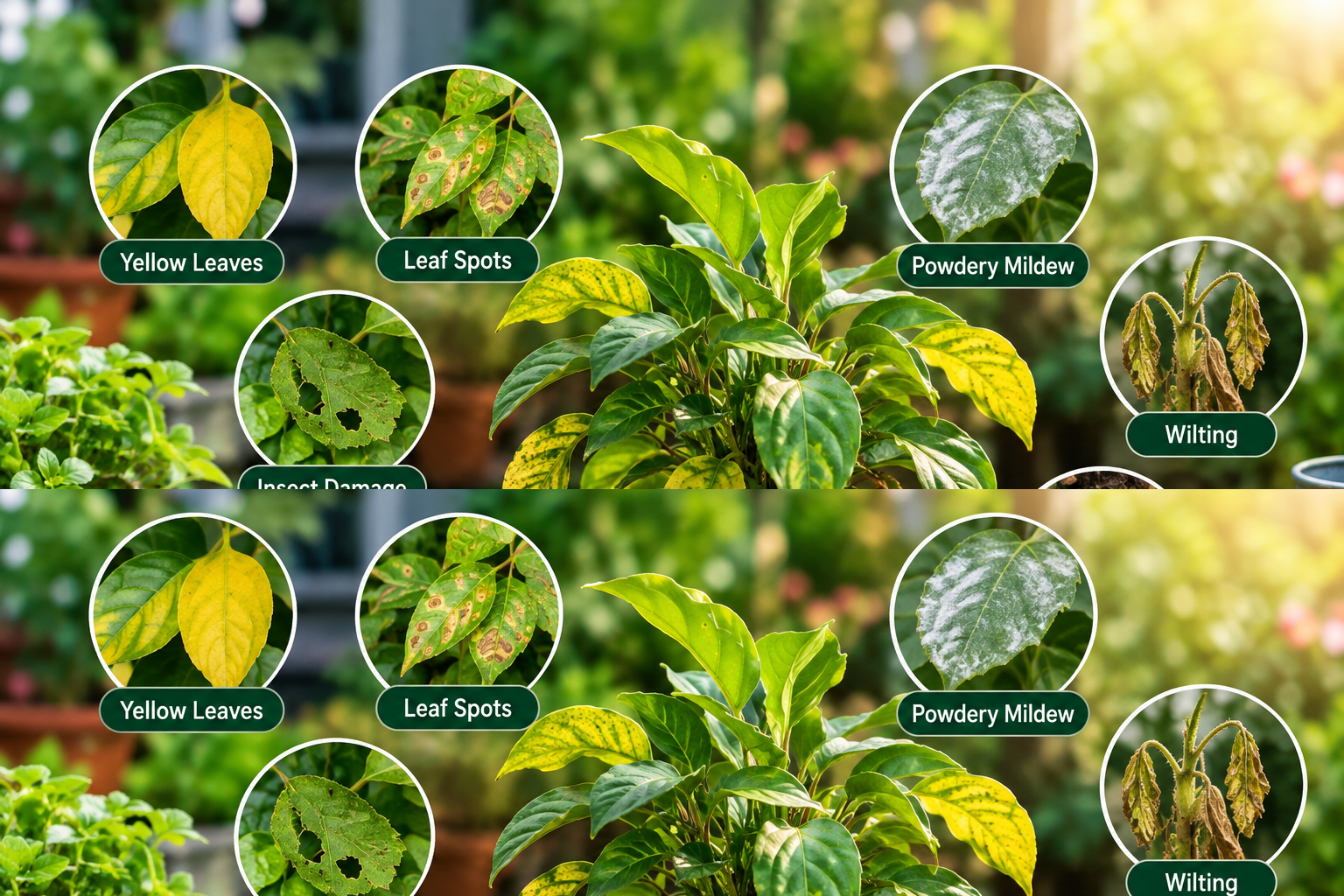
Yellow leaves can have many causes. Older leaves may naturally turn yellow as part of the plant’s growth cycle. However, widespread yellowing can sometimes be connected with overwatering, nutrient problems, root damage, or disease.
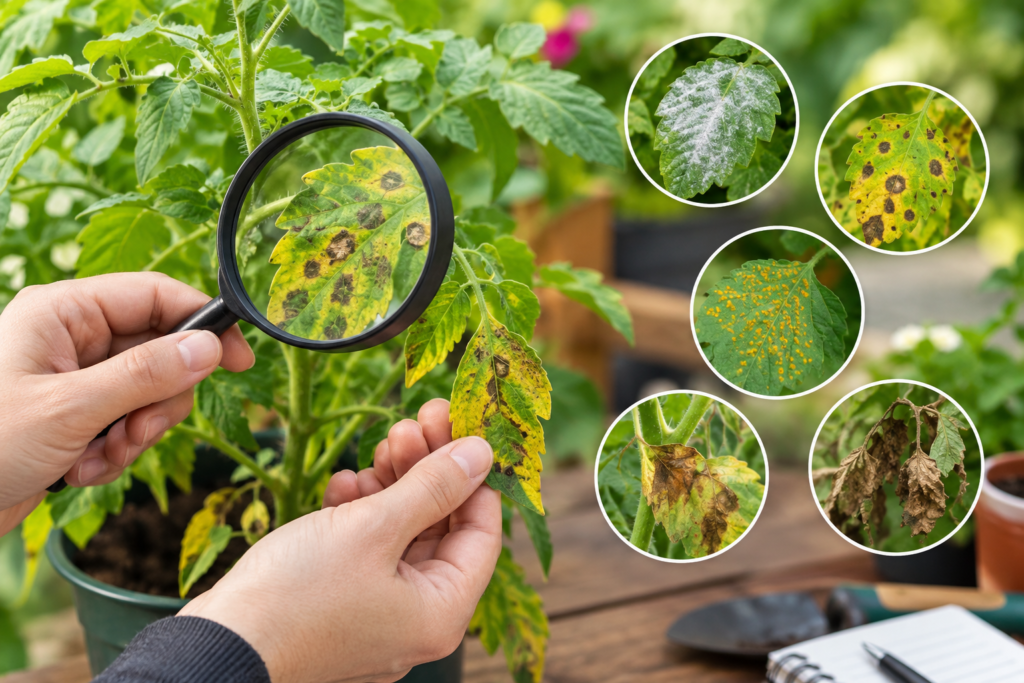
Brown spots are another common warning sign. If you notice small brown or black spots that gradually become larger, the plant may have a leaf spot disease. Some fungal and bacterial diseases produce spots with yellow areas around them.
White powder on the surface of leaves can be a sign of powdery mildew. This disease commonly appears as a white or gray powdery coating on leaves and stems.
Orange, yellow, or reddish powdery spots may indicate rust disease. These spots are often easier to see on the underside of leaves.
Check for Leaf Spot Diseases
Leaf spot is a common plant disease that can affect many types of garden plants. It usually appears as small discolored spots on leaves. Depending on the particular disease, the spots may be brown, black, gray, yellow, or reddish.
Some spots remain small, while others gradually expand and merge together. Severely affected leaves may eventually turn yellow and fall from the plant.
When I see unusual leaf spots, I check whether the problem is affecting only one leaf or several leaves. I also look at whether the spots are appearing on new growth or older leaves.
Wet foliage and poor air circulation can create conditions that encourage some leaf spot diseases. Removing badly affected leaves and keeping foliage dry can help reduce the spread of certain problems.
Recognizing Powdery Mildew
Powdery mildew is one of the easier plant diseases to recognize because it often produces a white powdery appearance.
The white growth may appear on the upper surface of leaves, stems, buds, or other plant parts. As the disease progresses, leaves can become distorted, yellow, or dry.
Powdery mildew is more likely to become noticeable when plants have poor air circulation and environmental conditions favor fungal growth.
If I notice powdery mildew, I first remove severely affected plant material where appropriate and improve airflow around the plant. I also avoid unnecessary moisture sitting on foliage and make sure plants have enough space between them.
Identifying Rust Disease
Rust diseases are often recognized by orange, yellow, brown, or reddish spots that develop on leaves. In some cases, the underside of the leaf contains small raised areas that release powdery spores.
As the disease progresses, affected leaves may become yellow and fall prematurely.
Rust can affect ornamental plants, vegetables, fruit plants, and other garden species. Because different rust diseases affect different plants, identifying the exact plant species can be useful when deciding how to manage the problem.
Good garden hygiene is important. Removing heavily infected leaves and cleaning up fallen plant material can help reduce sources of infection.
Watch for Blight Symptoms
Blight is a general term used for diseases that can cause rapid damage to leaves, stems, flowers, or fruit. Depending on the plant and disease, symptoms may include dark spots, yellowing, wilting, and rapidly dying tissue.
Tomatoes and potatoes, for example, can experience several diseases commonly described as blight.
One important clue is how quickly symptoms develop. If dark or water soaked looking areas begin spreading quickly through a plant, I would inspect the plant more closely rather than assuming the issue is simply a lack of fertilizer.
Early identification can be especially important when a disease has the potential to spread between nearby plants.
Check the Stems and Branches
Plant diseases are not limited to leaves. Stems and branches can also show important symptoms.
Look for dark areas, cracks, cankers, unusual swelling, soft tissue, or sections that suddenly die. A plant may also wilt even when the soil contains enough moisture.
Some diseases can damage the vascular tissues that move water and nutrients through the plant. In these cases, wilting may occur even when watering appears normal.
If one branch is dying while the rest of the plant looks healthy, inspect that area carefully. Compare it with healthy stems and look for discoloration or damaged tissue.
Do Not Ignore the Roots
Root problems can be difficult to notice because they happen below the soil. However, unhealthy roots can cause symptoms throughout the plant.
A plant with damaged or diseased roots may show yellow leaves, slow growth, wilting, or general weakness. In severe cases, roots may become soft, brown, black, or have an unpleasant smell.
Overwatering and poor drainage can create conditions that damage roots and encourage certain root diseases.
If a plant continues to decline despite proper watering and light, checking the roots may help reveal the problem. When inspecting roots, handle them gently because healthy roots can be easily damaged.
Distinguish Disease From Insect Damage
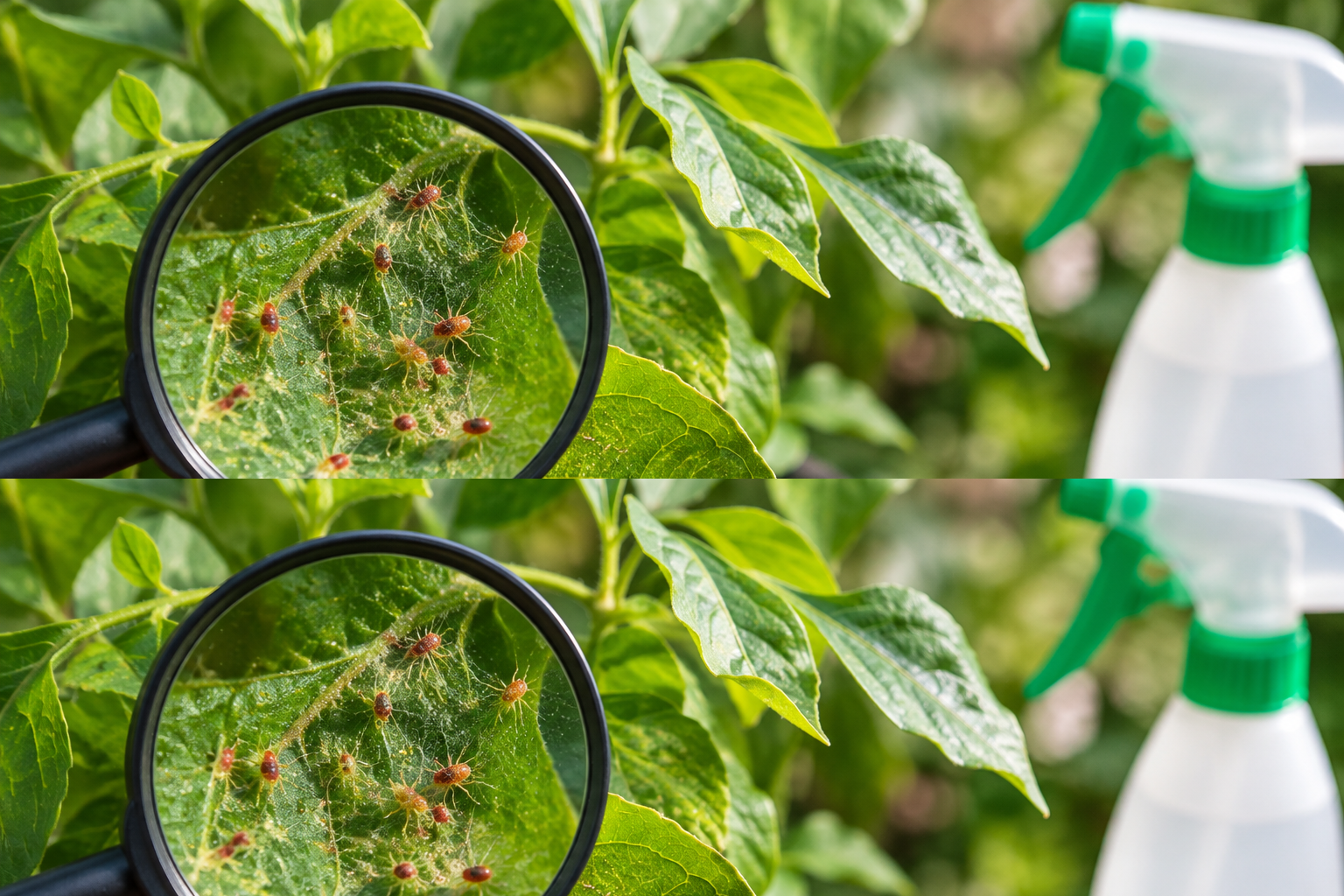
Insects can create symptoms that look like plant diseases. Aphids, whiteflies, spider mites, caterpillars, and other pests can damage leaves and stems.
Before assuming that a plant has a disease, I recommend checking the underside of leaves and the new growth for insects or eggs.
Tiny holes, chewed edges, sticky residue, webbing, curled leaves, and distorted new growth can point toward insect activity.
For example, aphids often gather around young shoots and leaf undersides. Their feeding can cause leaves to curl or become distorted.
This simple inspection can prevent unnecessary disease treatment.
Consider Watering Problems
Watering is one of the first things I check when a plant looks unhealthy.
Both too much water and too little water can cause wilting, yellow leaves, brown edges, and slow growth. These symptoms can easily be confused with plant disease.
If the soil is constantly wet, roots may struggle because there is not enough oxygen around them. If the soil is extremely dry, the plant may wilt because it cannot obtain enough water.
Before treating a plant for disease, check the soil moisture and drainage. Understanding the plant’s normal watering requirements can make diagnosis much easier.
Look at the Whole Plant
One of the biggest mistakes beginners can make is focusing on a single leaf without looking at the rest of the plant.
When I inspect a plant, I try to look at its overall condition. I check the leaves, stems, flowers, fruit, soil, roots when necessary, and nearby plants.
Ask yourself a few simple questions. When did the symptoms start? Are they spreading? Are new leaves affected? Are older leaves affected first? Are nearby plants showing the same symptoms? Has the weather recently been unusually wet or dry?
These questions can provide useful clues.
Common Signs of Plant Diseases
Some common symptoms to watch for include:
Yellowing leaves
Brown or black leaf spots
White powdery growth
Orange or reddish spots
Wilting despite adequate soil moisture
Soft or rotting plant tissue
Dark lesions on stems
Premature leaf drop
Distorted or curled new growth
Poor fruit development
Unusual patterns or discoloration
The important thing is that these symptoms do not always identify one specific disease. They are clues that tell you to investigate further.
How to Prevent Plant Diseases
Prevention is often easier than dealing with a serious plant disease later.
I always consider proper plant spacing important because good airflow can help foliage dry more quickly. Watering the soil instead of constantly wetting the leaves can also be useful for many plants.
Removing dead and heavily infected plant material can improve garden hygiene. Garden tools should also be cleaned regularly, especially when moving between plants that appear diseased and healthy plants.
Choosing healthy plants from reliable sources is another useful step. Plants that already show unusual spots, severe wilting, or rotting should be inspected carefully before being introduced into a garden.
Healthy soil, appropriate sunlight, suitable watering, and proper nutrition also help plants grow strongly.
When to Get Expert Help
Sometimes plant disease identification is difficult from symptoms alone. Several different problems can create similar signs.
If a valuable plant is seriously affected, the disease is spreading quickly, or you are unsure about the cause, consider contacting a local gardening expert, agricultural extension service, nursery professional, or plant diagnostic laboratory.
Taking clear photographs of the affected leaves, stems, and entire plant can also make it easier for someone to assess the problem.
For serious crop problems, professional identification can be especially useful before applying any treatment.
Final Thoughts
Learning how to identify common plant diseases does not require you to become a plant pathologist. In my experience, careful observation is the most useful place to start.
Look closely at the leaves, stems, roots, and soil. Pay attention to the pattern of symptoms and how quickly they are developing. At the same time, remember that insects, watering problems, nutrient deficiencies, weather, and poor growing conditions can sometimes look like disease.
The earlier you notice something unusual, the more opportunity you have to protect the plant and nearby plants. With regular inspection and good gardening habits, identifying plant diseases becomes much easier over time.
A healthy garden is not a garden where every plant is perfect. It is a garden where problems are noticed early, understood carefully, and managed with patience.